Understanding the layout of a belt conveyor system is key to optimizing its operation and ensuring smooth material transport. A well-designed diagram provides a clear visual representation, showing how each component interacts within the system. Key elements like the belt, pulleys, motors, and rollers are laid out to highlight their function and positioning. By studying this diagram, you can easily identify how material flows from one point to another, whether it’s in a warehouse, mining site, or factory.
In the diagram, pay attention to the placement of the drive pulley and idler rollers, which are crucial for belt movement. The drive pulley, typically located at the loading end, is powered by a motor, while the idler rollers maintain the belt’s tension and support it across its length. Understanding these key parts will help you troubleshoot potential issues, like uneven wear or misalignment, that could impact the belt’s performance.
When analyzing a belt conveyor diagram, also consider the path the material takes. The conveyor’s shape, often a straight line or a loop, affects how materials are handled. If the conveyor is curved or goes around a corner, special tensioning devices may be included to prevent slippage. Each component in the diagram serves a specific purpose, and recognizing their relationships allows for better maintenance and design adjustments in real-world applications.
Belt Conveyor Diagram
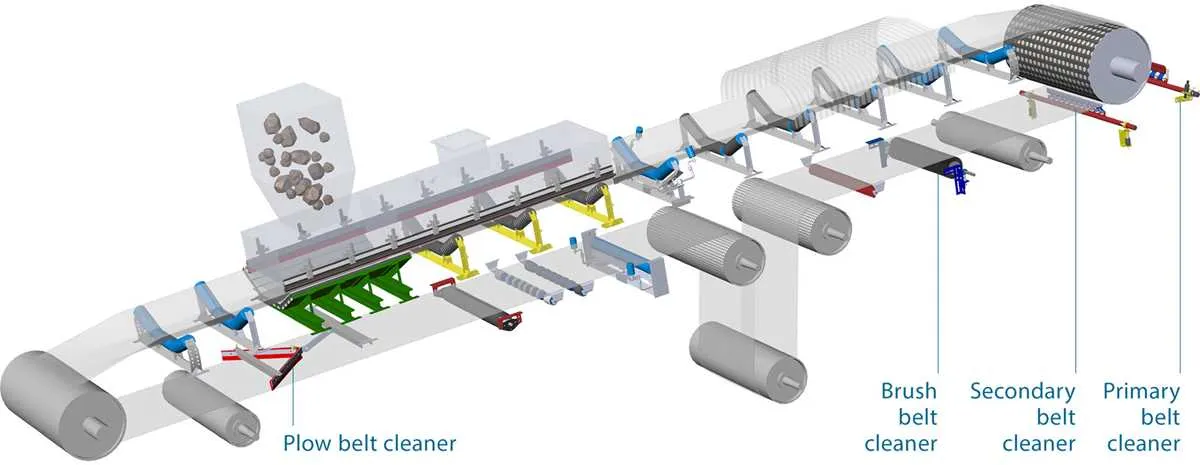
The belt conveyor diagram shows the key components that make the system functional. A clear diagram illustrates how the belt, pulleys, rollers, and motors work together to transport materials efficiently. Ensure the conveyor belt is properly aligned with the rollers to avoid slippage or uneven wear.
Start by identifying the pulleys at both ends of the conveyor belt. The drive pulley, powered by the motor, controls the belt’s movement, while the idler pulley supports the opposite end, helping maintain tension. Between these pulleys are the rollers, which support the belt and reduce friction. Depending on the design, rollers can be adjustable to maintain proper belt tracking.
It’s important to include the motor in the diagram. This component provides the necessary power to rotate the drive pulley, controlling the speed and direction of the conveyor. For larger systems, motors are usually equipped with a gearbox to manage power output more effectively.
The conveyor belt itself, often made of rubber or PVC, forms the critical connection between the motorized and non-motorized components. The material of the belt should match the type of goods being moved, ensuring durability and minimal wear. For example, a heavy-duty belt may be required for transporting large, abrasive materials, while lighter belts can handle fragile items.
Understanding the alignment and tensioning of the belt is also important. Incorrect tension can cause the belt to slip, resulting in operational inefficiencies. Most systems include a way to adjust the tension to keep the belt at optimal performance.
By studying the diagram, operators can quickly pinpoint issues, such as misaligned components or inadequate tension, and take corrective actions. A well-maintained conveyor system, as shown in the diagram, can operate smoothly with minimal downtime.
How to Read and Interpret a Belt Conveyor Diagram
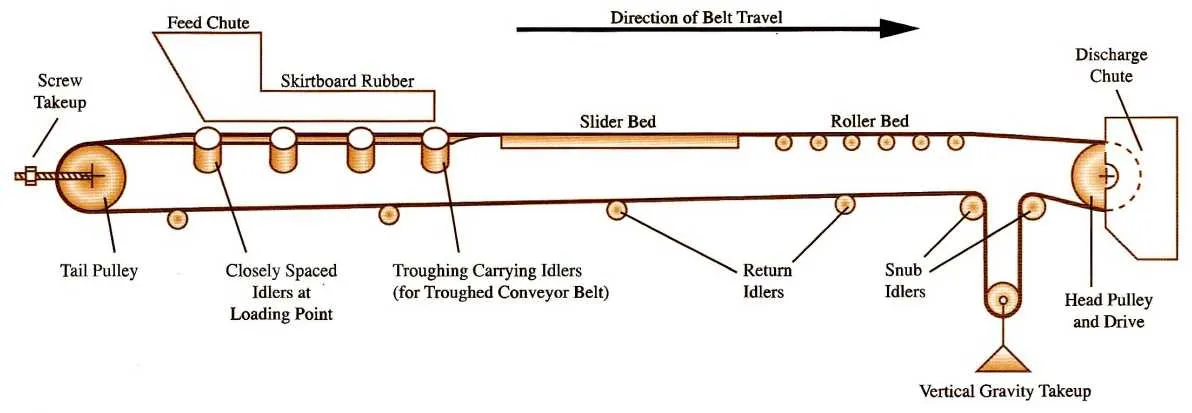
Focus on the main components first: the conveyor belt, pulleys, rollers, and motors. Identify the direction of movement, usually indicated by arrows. The motor’s location shows where the power comes from, while the pulleys and rollers determine how the belt moves through the system.
Check the belt type and its material. This tells you about the capacity and function of the conveyor. Diagrams often highlight the belt’s width, thickness, and strength to handle specific loads or materials.
Look at the tension system, which is often displayed near the head pulley. The diagram will show whether it’s a fixed or adjustable tension mechanism. Understanding this helps ensure the belt operates within the right tension for efficiency and longevity.
Next, identify any sensors or control systems on the diagram. These indicate how the conveyor’s speed and load are monitored. Sometimes these are connected to automated systems that adjust the flow of materials based on real-time data.
Note the loading and discharge points. These indicate where materials are added and removed from the conveyor. Depending on the design, these may include hoppers, chutes, or feeders that need to be positioned correctly to avoid blockages.
Finally, check for any maintenance or safety features. Look for items like access points for cleaning or inspection, emergency stops, or protective covers. These elements are crucial for keeping the system running smoothly and safely.
Key Components of a Belt Conveyor System and Their Functions

The belt conveyor system consists of several key components that work together to transport materials smoothly and efficiently. Understanding the role of each component helps in optimizing system performance and maintaining reliability.
- Belt: The primary surface that moves materials from one point to another. It is typically made of rubber, PVC, or fabric and must be selected based on the material being transported.
- Drive Pulley: This pulley is responsible for providing the movement to the belt. It is powered by a motor and works with the tail pulley to keep the belt in motion.
- Idler Pulleys: These pulleys support the belt and help it maintain its proper tension. They also prevent the belt from sagging in the middle, ensuring consistent material flow.
- Tail Pulley: Located at the opposite end of the drive pulley, it helps maintain belt tension and keeps the belt taut as it returns to its starting position.
- Motor: Powers the conveyor system by driving the drive pulley. The motor is selected based on the weight and speed requirements of the materials being transported.
- Take-Up Unit: This component adjusts the tension of the belt, ensuring it remains tight and avoids slack. It can be manual or automatic, depending on the system’s design.
- Conveyor Frame: The structure that supports all other components. It must be designed for stability and durability, handling the weight of the conveyor and the materials it transports.
- Safety Devices: Include features such as emergency stops, belt misalignment detectors, and sensors to monitor and prevent accidents or system failure.
Each component plays a specific role in maintaining the belt conveyor’s smooth operation, making it essential to choose high-quality parts and perform regular maintenance to keep the system running at optimal levels.
Common Belt Conveyor Layouts and Their Applications
Horizontal belt conveyors are the most widely used layout, ideal for moving materials over short to medium distances. These systems are often employed in industries like mining, agriculture, and logistics. They operate on a flat surface, allowing for straightforward material transfer without significant elevation changes.
Inclined belt conveyors are used when a change in height is required. These layouts are typically found in environments such as waste management and construction, where materials need to be moved from one level to another. The angle of inclination can vary depending on the material being transported and its flow characteristics.
Curved belt conveyors combine horizontal and angled sections, making them versatile for tight spaces or complex facility layouts. They are commonly used in airports, package handling, and assembly lines where the path of material flow needs to change direction without disrupting the conveyor’s efficiency.
Vertical belt conveyors are designed for moving goods over long vertical distances. They are often used in the food processing and pharmaceutical industries, where they can transport bulk materials between floors or through different levels of a production facility.
Zero-pressure accumulation conveyors are beneficial in systems where precise control of product flow is required. These conveyors prevent products from accumulating at any given point on the belt. They are ideal for applications in distribution centers or where products are transferred to various sorting or packaging stations.
Each of these layouts offers unique advantages depending on the space, materials, and process requirements. Understanding the specific needs of a facility allows for more efficient and tailored conveyor system design.