
Locate the serpentine belt routing sticker under the hood first. If it’s missing, use the diagram that matches the 2.5L 4-cylinder or 3.5L V6 engine configuration. The 2.5L engine uses a single serpentine belt that wraps around the crankshaft pulley, alternator, water pump, idler pulley, and A/C compressor. The belt tensioner is spring-loaded and sits between the crankshaft and alternator.
For the 3.5L V6, the setup is slightly more complex. It includes a main serpentine belt and a separate stretch-fit belt for the A/C compressor. The main belt connects the crankshaft pulley, alternator, water pump, power steering pump, and tensioner. The A/C belt sits lower and requires a special tool or cutting and replacing method, since it doesn’t use a tensioner.
Inspect pulleys for wobble or damage before installing a new belt. Always route the belt correctly to prevent misalignment and premature wear. A misrouted belt can lead to loss of charging, overheating, or steering failure. Use a belt routing diagram specific to your engine type and production month to match factory configuration.
2011 Camry Belt Diagram
Use the serpentine belt routing diagram located on the underside of the hood or radiator support if available. If it’s missing, reference the layout below for the 2.5L 4-cylinder and 3.5L V6 engines.
2.5L 4-Cylinder (2AR-FE): The serpentine belt wraps around seven pulleys in this order: crankshaft → A/C compressor → idler pulley → alternator → water pump → tensioner → power steering pump → back to crankshaft. Always rotate the tensioner clockwise with a 14mm wrench to relieve tension during removal or installation.
3.5L V6 (2GR-FE): This engine uses a stretch-fit belt for the water pump and a serpentine belt for the rest. The main belt path: crankshaft → alternator → idler pulley → A/C compressor → power steering pump → tensioner → back to crankshaft. For the water pump belt, do not reuse after removal. Use a stretch belt installation tool for proper alignment and avoid damaging the new belt.
Always inspect pulleys for wear or misalignment before installing a new belt. Replace the tensioner if it shows signs of sticking or weak spring action.
Location and Routing of the Serpentine Belt on a 2011 Toyota Camry
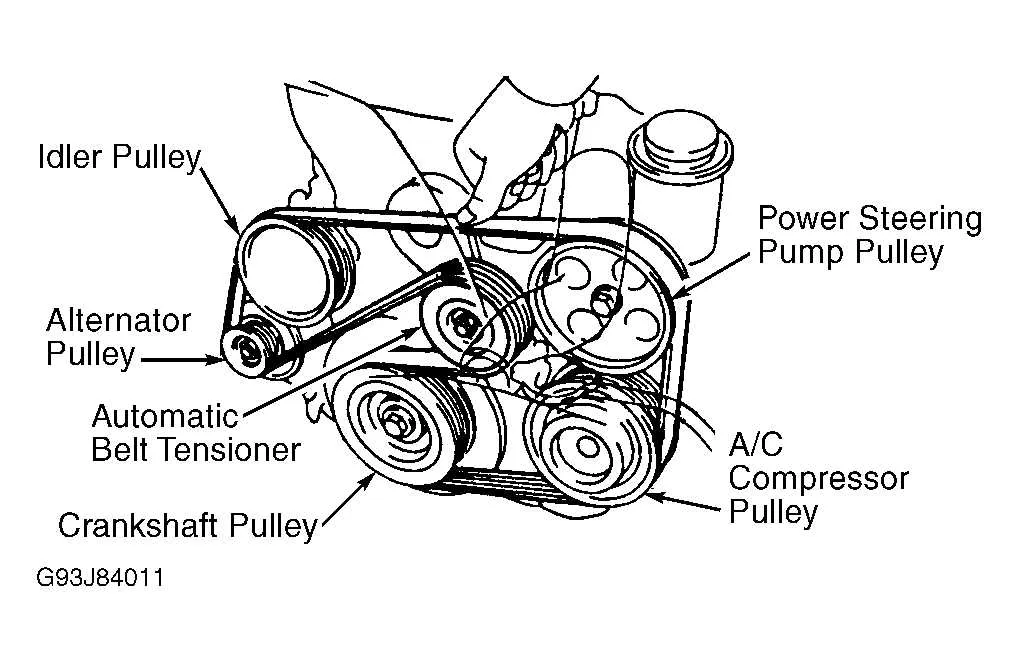
The serpentine belt on a 2011 Toyota Camry with a 2.5L 4-cylinder engine runs along the front passenger side of the engine bay. To locate it, look just below the alternator and next to the engine mount. The belt wraps around several pulleys in a specific sequence that must be followed during installation.
Routing begins at the crankshaft pulley at the bottom center. From there, the belt travels up and wraps clockwise around the alternator pulley, then down under the water pump pulley. It continues up and over the idler pulley, then moves down and around the A/C compressor pulley. Finally, it wraps around the tensioner pulley before completing the loop back at the crankshaft.
Always refer to the belt routing diagram sticker found on the radiator support or underside of the hood for confirmation. If the sticker is missing, consult the service manual or take a reference photo before removal. Use a 14mm wrench on the tensioner pulley to relieve tension when removing or installing the belt.
How to Identify Belt Tensioner and Pulley Positions in the Engine Bay
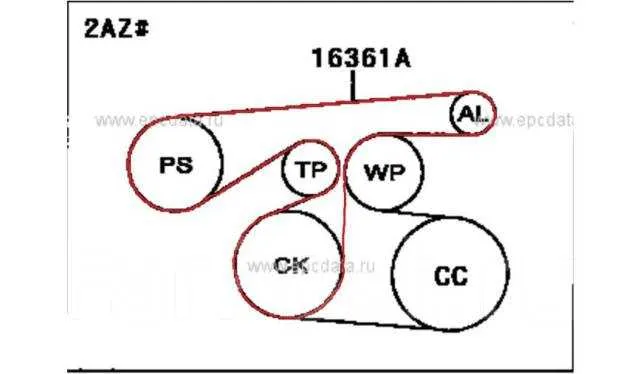
Begin by locating the serpentine belt at the front of the engine. It loops through several components, including the crankshaft pulley, alternator, power steering pump, and A/C compressor. The tensioner pulley maintains pressure on the belt to prevent slippage.
Look for a smooth, spring-loaded pulley mounted on an arm–this is the automatic belt tensioner. On the 2011 Camry, it’s typically found slightly below and to the right of the alternator (passenger side), bolted directly to the engine block. Use a wrench or serpentine belt tool on the tensioner’s square hole or bolt head to relieve tension and inspect belt routing.
The idler pulley, which helps guide the belt, usually sits near the center or lower part of the belt path and has no attached component. It rotates freely without resistance or noise if in good condition. To confirm pulley roles, compare their positions with a belt routing diagram located on the radiator support or under the hood label.
Check for signs of wear on each pulley–grooves should be clean, and bearings should spin smoothly. Misalignment or wobbling indicates the need for replacement. Always verify the path and pulley layout before removing or installing a new belt.
Steps to Remove and Replace the Drive Belt Without Special Tools
Loosen the front passenger-side wheel lugs slightly, then lift the car and secure it with jack stands. Remove the wheel and the plastic splash guard behind it to access the drive belt area.
Use a 14mm box wrench to rotate the tensioner clockwise. This relieves tension from the belt. While holding the tensioner, slide the belt off the alternator pulley first, then slowly release the tensioner back to its resting position.
Pull the belt out, noting how it routes around each pulley. Refer to a diagram or take a clear photo for reference.
Inspect all pulleys by spinning them manually. They should rotate smoothly without resistance or noise. If any pulley wobbles or feels rough, replace it before installing the new belt.
Route the new belt according to the diagram, leaving the tensioner pulley for last. Make sure the belt sits correctly in all grooves and doesn’t ride on the edges.
Rotate the tensioner again with the wrench, slip the belt over the tensioner pulley, then slowly release the tensioner to apply pressure to the new belt.
Double-check the belt alignment. All ribs must sit fully in the grooves. Misalignment causes premature wear or noise.
Reinstall the splash guard and the wheel. Torque the lug nuts to factory spec after lowering the vehicle.