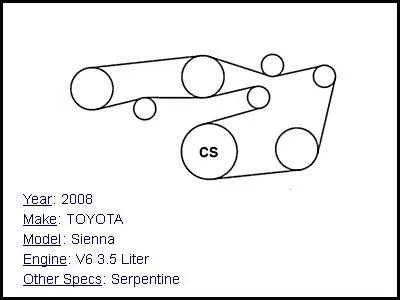
Check the serpentine belt on a 2014 Toyota Camry by inspecting for cracks, fraying, or glazing across the ribbed surface. A worn belt can slip or break, leading to loss of power steering, alternator charging issues, or air conditioning failure. Regular visual checks every 15,000 miles help prevent unexpected breakdowns.
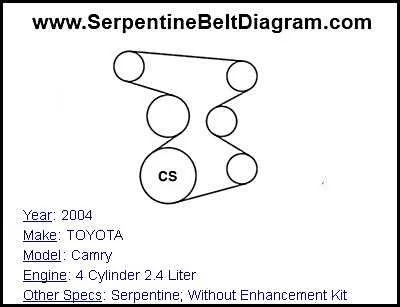
The 2014 Camry uses a single serpentine belt to drive the alternator, power steering pump, water pump, and air conditioning compressor. Understanding its routing pattern is necessary before replacement. The diagram shows the correct path around the crankshaft pulley, tensioner, and accessory pulleys, ensuring proper alignment and tension during installation.
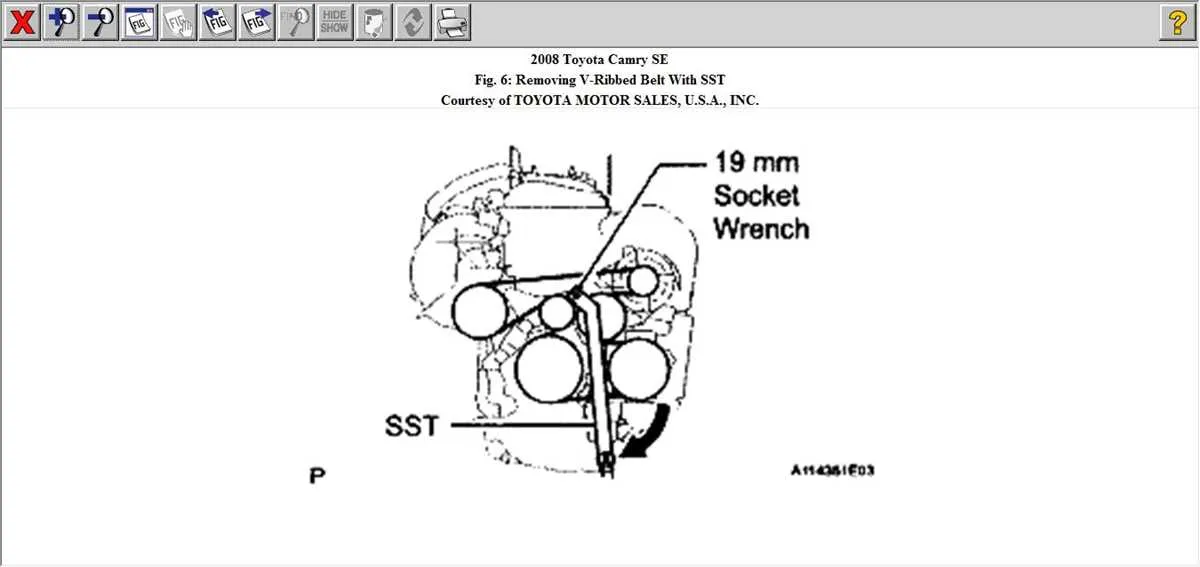
Before removing the old belt, use a socket wrench on the automatic tensioner to relieve pressure and slide the belt off safely. Keep the diagram nearby or take a photo of the existing setup for reference. Installing the new belt requires threading it through each pulley in the exact order shown on the diagram and reapplying tension with the tensioner tool.
Use an OEM-quality belt designed for the Camry’s 2.5L or 3.5L engine to ensure correct fit and durability. After installation, run the engine for a few minutes and observe the belt’s alignment. A properly seated belt will operate quietly without vibration or side wear, guaranteeing reliable accessory function.
2014 Toyota Camry Belt Diagram
Refer to the diagram of the 2014 Toyota Camry serpentine belt to confirm the exact routing before removing or installing the belt. The belt wraps around multiple pulleys, including the crankshaft, alternator, power steering pump, air conditioning compressor, and the tensioner.
Check that the tensioner pulley is positioned correctly, as it maintains the right tension across all components. A misaligned belt can cause squeaking, uneven wear, or accessory malfunction. Always compare the belt path with the factory diagram to avoid skipping a pulley.
Use a 15mm wrench or serpentine belt tool to rotate the tensioner clockwise and relieve tension. This allows easy removal of the old belt and proper placement of the new one along the designated routing. Ensure that the ribs of the belt sit fully inside the grooves of each pulley before releasing the tensioner.
After installation, rotate the engine manually with a socket on the crankshaft bolt to confirm that the belt tracks smoothly. This step verifies correct alignment and prevents slippage once the engine runs under load.
Identifying the Correct Serpentine Belt for 2014 Toyota Camry Engines
Check the engine type before selecting a serpentine belt, as the 2014 Toyota Camry uses different sizes depending on configuration. The 2.5L 4-cylinder engine typically requires a belt measuring around 84.5 inches in length, while the 3.5L V6 engine uses a belt closer to 92 inches.
Verify the number of ribs on the belt, since the Camry uses a 6-rib design across both engine types. Using a belt with the wrong rib count can cause misalignment and premature wear. Always match the rib count with the pulley system.
Cross-check the part numbers provided by Toyota: for the 2.5L engine, belts such as Toyota OEM 90916-02570 or aftermarket equivalents fit correctly; for the 3.5L engine, look for Toyota OEM 90916-02685. Confirm compatibility with your VIN to avoid mismatches.
Inspect pulleys for wear or damage before installing the new belt. A new belt will not last if tensioners or idler pulleys are faulty. Replacing these components together ensures proper alignment and smooth operation.
Step by Step Routing Guide for the 2014 Toyota Camry Belt System
Place the belt around the crankshaft pulley first, making sure it sits correctly in the grooves. This pulley drives the rest of the system, so align it firmly before moving to the next component.
Wrap the belt over the alternator pulley and check that it lays flat without twisting. From there, guide it over the water pump pulley, keeping constant tension with your hand as you move along.
Continue by routing the belt around the power steering pump pulley and then the air conditioning compressor. Verify that each section follows the factory routing path without skipping any pulley.
Slip the belt under the idler pulley and finally route it over the automatic tensioner. Use a wrench on the tensioner to relieve pressure, slide the belt into place, and slowly release tension to secure it.
Inspect the entire system visually, making sure the belt is centered on every pulley. Rotate the crankshaft manually with a socket and ratchet for a full cycle to confirm proper seating and smooth alignment.
Common Signs of Belt Wear and When to Replace on a 2014 Toyota Camry
Inspect the serpentine belt every 15,000 miles and replace it if you notice visible deterioration. Delaying replacement risks power steering failure, alternator issues, and overheating.
- Cracks and fraying: Small surface cracks across the ribs or frayed edges signal that the belt has hardened and lost flexibility.
- Glazing or shiny surface: A polished look indicates the belt is slipping over pulleys and has reduced grip.
- Chirping or squealing noises: Persistent high-pitched sounds while starting or accelerating often point to a worn or misaligned belt.
- Loss of tension: If the belt feels loose despite the tensioner, it can no longer maintain proper rotation of accessories.
- Visible chunks missing: Sections of rib material breaking off reduce belt contact area and require immediate replacement.
On the 2014 Toyota Camry, the serpentine belt typically lasts 60,000–90,000 miles. Replace sooner if you notice noise, overheating, or warning lights related to the charging system. Always inspect both the belt and the automatic tensioner, as a failing tensioner shortens belt life significantly.