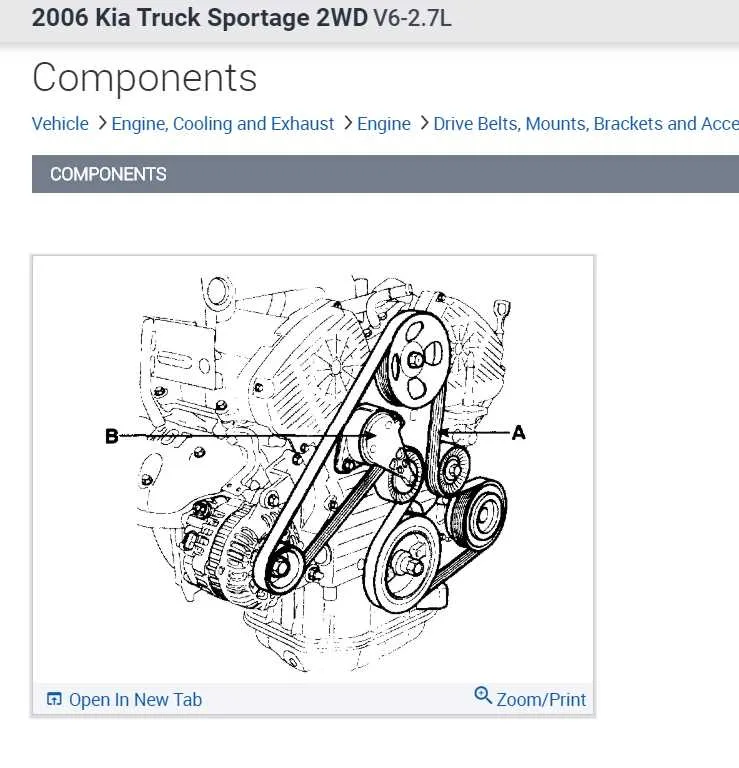
Use a 15mm wrench or serpentine belt tool to rotate the tensioner clockwise and release tension on the belt. Before removal, inspect the current belt routing and compare it with the diagram under the hood or the reference provided below. This step prevents misalignment during reinstallation.
The 2019 Kia Sorento with the 3.3L V6 engine uses a single serpentine belt that drives the alternator, power steering pump, A/C compressor, and water pump. The belt loops around seven pulleys, including the crankshaft and tensioner pulley. Always install the new belt following the exact routing pattern to maintain correct rotation direction and pulley alignment.
Check for cracks, fraying, or glazing on the belt surface. Kia recommends inspecting the belt every 60,000 miles and replacing it by 100,000 miles, or sooner if signs of wear appear. A faulty belt can cause loss of power steering, battery charging failure, or engine overheating.
After installing the new belt, rotate the tensioner again, slip the belt onto the final pulley, and release the tensioner slowly. Verify all ribs are seated correctly in the pulley grooves. Start the engine and observe the belt’s motion to ensure smooth operation without noise or vibration.
2019 Kia Sorento Serpentine Belt Diagram
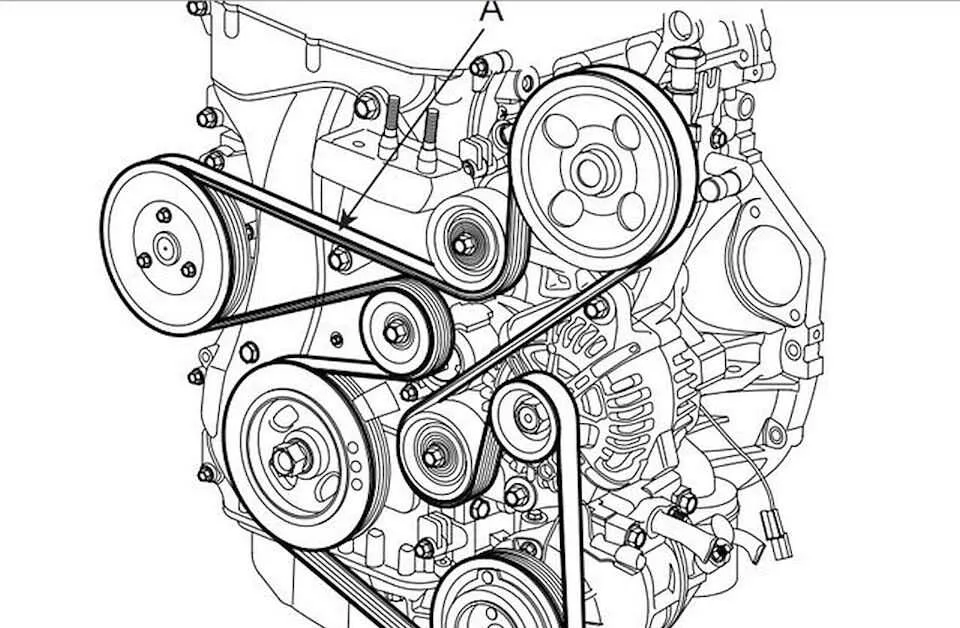
Check the routing diagram printed on the radiator support or underside of the hood before replacing the serpentine belt. If the label is missing, use the configuration below specific to the 3.3L V6 engine, which is the most common in the 2019 Kia Sorento lineup.
- Crankshaft Pulley → A/C Compressor → Idler Pulley → Alternator
- Alternator → Power Steering Pump → Water Pump → Tensioner → Back to Crankshaft Pulley
Use a 17mm socket to rotate the tensioner clockwise and release belt tension. Before installing a new belt, inspect all pulleys for wear or misalignment. The correct belt length for the 3.3L V6 is approximately 96.2 inches with a 6-rib configuration. Always route the belt following the diagram to prevent misalignment and accessory failure.
For the 2.4L inline-4 engine, the routing differs:
- Crankshaft Pulley → Water Pump → Alternator → Idler Pulley → A/C Compressor → Tensioner → Back to Crankshaft Pulley
Double-check the engine variant before selecting a replacement belt. Using the wrong belt can result in slack or improper fit, leading to noise or premature wear.
How to Locate and Identify the Serpentine Belt on a 2019 Kia Sorento
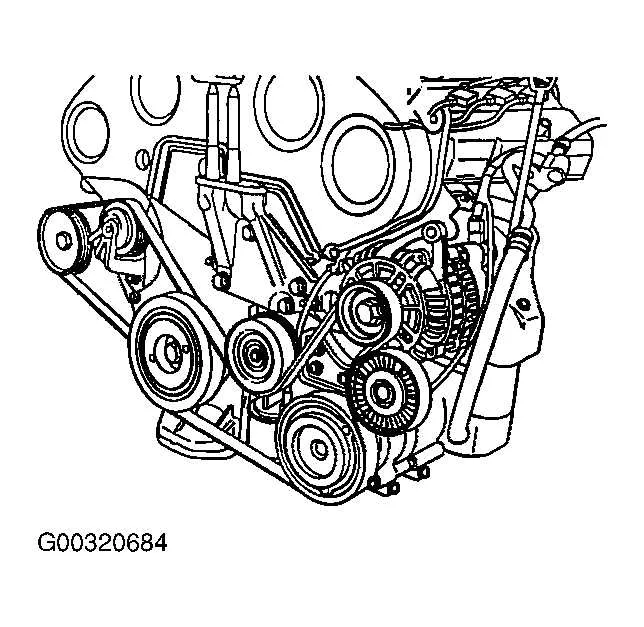
Open the hood and focus on the passenger side of the engine bay, near the front. The serpentine belt sits on the side of the engine, wrapped around multiple pulleys including the crankshaft, alternator, power steering pump, and air conditioning compressor.
On models with the 2.4L 4-cylinder engine, the belt is easily visible without removing components. For the 3.3L V6 engine, you may need to remove the plastic engine cover for better access. Look for a long, black rubber belt with ribbed grooves running across several pulleys in a continuous loop.
Check the radiator support or underside of the hood for a factory sticker showing the belt routing diagram. If the diagram is missing, refer to the owner’s manual or a verified repair manual for accurate routing.
To confirm it’s the serpentine belt, trace it from the crankshaft pulley upward. It should pass through at least four other components. Do not confuse it with the timing belt, which is housed behind a cover and not visible from the engine bay.
Use a flashlight and check the belt for wear: cracking, fraying, or glazing. If signs of damage are present, prepare for a replacement. Always verify the engine configuration to ensure you’re referencing the correct belt layout.
Step-by-Step Instructions for Removing and Replacing the Serpentine Belt
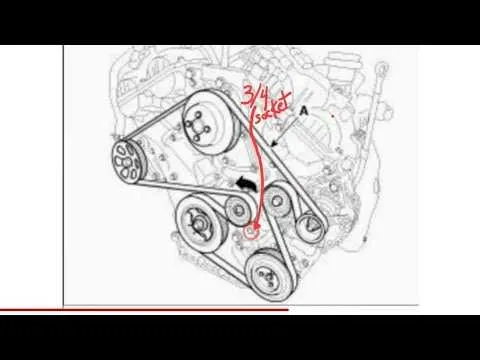
Use a 17mm socket and a long-handled ratchet or breaker bar to rotate the tensioner clockwise. This relieves tension on the belt so you can slide it off one of the pulleys, typically the alternator or idler pulley. Make sure the tool is secure before applying force, as the spring-loaded tensioner can snap back quickly.
Once the belt is off, inspect the routing diagram located on the radiator support or under the hood. If it’s missing, take a clear photo before removal or refer to a factory service manual. This ensures correct alignment during reinstallation.
Remove the old belt completely, checking for fraying, cracks, or glazing. Spin each pulley by hand to check for bearing noise or resistance. Replace any damaged components before proceeding with the new belt.
Position the new belt according to the routing diagram. Leave the belt off the tensioner pulley last, so it can be slipped on while holding the tensioner back. Confirm that the belt sits fully within all pulley grooves, especially on ribbed pulleys like the crankshaft and A/C compressor.
Rotate the tensioner again, slide the belt onto the final pulley, and gently release the tensioner. Do not let it snap back. Double-check alignment and routing from all angles. A misaligned belt can shred within minutes.
Start the engine and observe the belt in motion. It should run smoothly without noise or visible wobble. Shut off the engine and recheck tension and alignment after a few minutes of operation.
Tensioner Pulley Location and Routing Path for All Engine Types
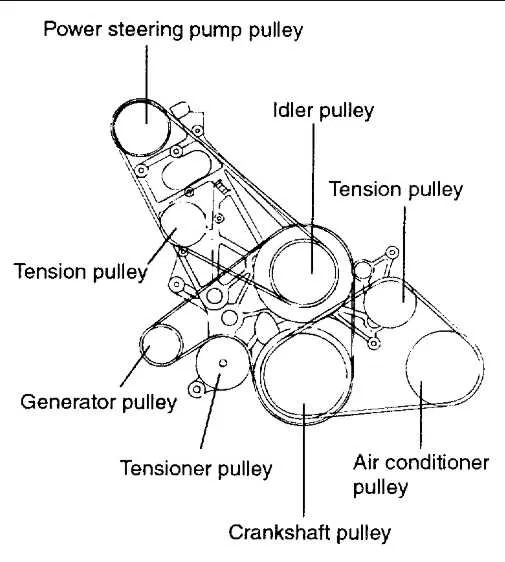
Locate the tensioner pulley on the passenger side of the engine bay, mounted to the front of the engine block. On all 2019 Kia Sorento engines, it sits below the alternator and above the crankshaft pulley. Use a 17mm wrench or serpentine belt tool to rotate the tensioner clockwise, which relieves tension and allows belt removal or installation.
For the 2.4L I4 engine, the serpentine belt routing starts at the crankshaft pulley, wraps up to the A/C compressor, over the tensioner, then around the alternator and water pump. Ensure the ribbed side of the belt contacts ribbed pulleys, while the flat side faces the tensioner and idler pulleys.
On the 3.3L V6 engine, routing begins at the crankshaft pulley, moves to the A/C compressor (bottom right), loops under the idler, up around the alternator, then down under the tensioner pulley and finishes at the power steering pump. The V6 layout includes more pulleys, so double-check alignment before releasing tension.
Always inspect the belt for fraying or cracks before reinstallation. Misrouting can cause accessory failure or squealing. Refer to the under-hood diagram label for confirmation if available. Tighten all fasteners to factory spec after servicing.