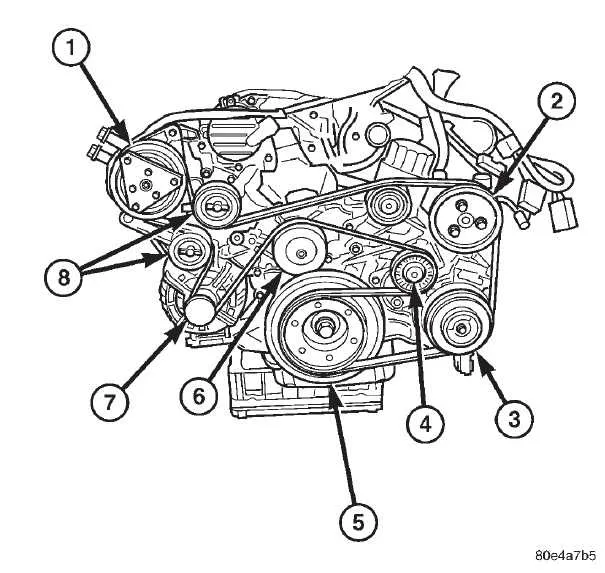
Check the serpentine and accessory belt layout carefully before starting any maintenance on your 2000 Jeep Cherokee. The vehicle uses a single serpentine belt to drive the alternator, power steering pump, and air conditioning compressor. Accurate routing prevents slippage and premature wear.
Inspect the belt for cracks, fraying, or glazing along the ribs. Replace belts showing visible wear immediately to maintain engine performance and avoid sudden failure. Proper tension is critical; the belt should deflect about half an inch under moderate finger pressure on the longest span.
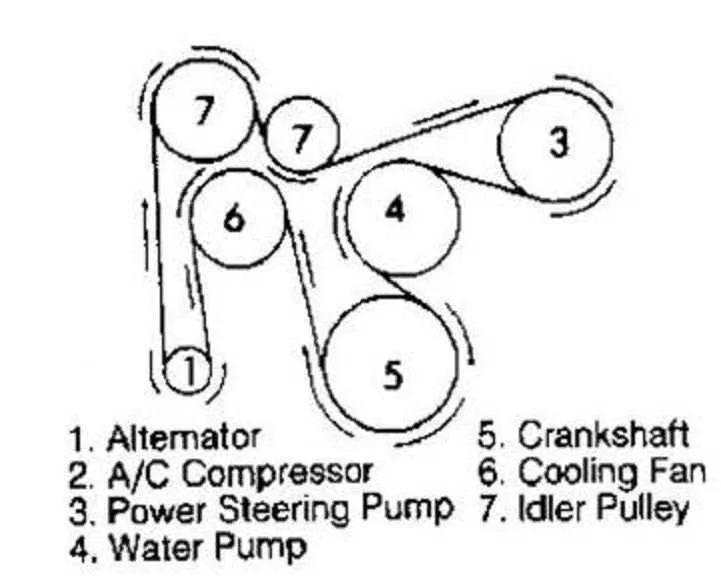
Use the diagram to identify each pulley: crankshaft, alternator, power steering, air conditioning, and tensioner. Follow the exact routing during installation, starting from the crankshaft and looping around each accessory. Confirm the belt seats evenly in all pulley grooves before starting the engine.
For vehicles with additional accessories like a secondary tensioner or optional air pump, refer to the labeled diagram to avoid routing errors. Double-check alignment and tension after the first engine start to ensure smooth operation and prevent belt noise or premature wear.
2000 Jeep Cherokee Belt Diagram Detailed Guide for Maintenance and Replacement
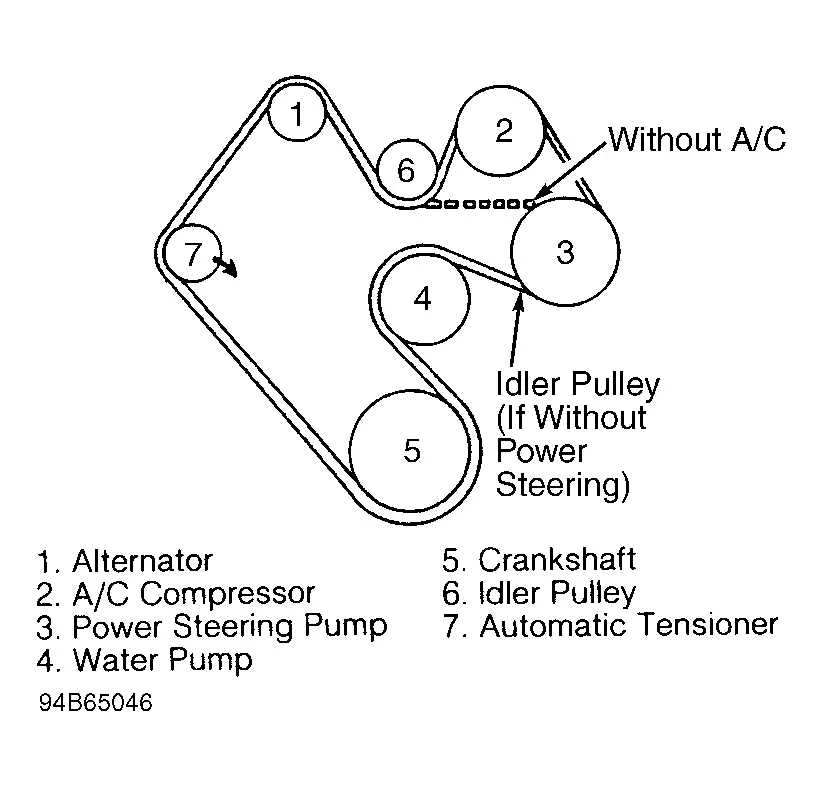
Locate the serpentine belt routing diagram on the engine cover or inside the hood to verify the exact path before removal. For the 4.0L inline-six engine, the belt loops around the crankshaft pulley, alternator, power steering pump, water pump, and tensioner pulley in a precise sequence. Following this diagram prevents misalignment and improper tension.
Begin maintenance by loosening the tensioner with a 3/8-inch ratchet or breaker bar. Slide the belt off the pulleys carefully, noting the routing or taking a photo for reference. Inspect each pulley for wear, rough rotation, or play, and replace any component showing damage before installing a new belt.
Install the replacement belt by following the routing diagram exactly. Engage the tensioner to apply proper tension, ensuring the belt sits evenly in all pulley grooves. Rotate the engine manually with a wrench on the crankshaft pulley to confirm smooth operation and correct alignment. Check for squealing or slipping after the first few minutes of engine operation and adjust tension if needed.
Regularly inspect the belt for cracks, fraying, or glazing every 30,000 miles. Replacing the belt at 60,000–70,000 miles prevents unexpected failures. Maintaining the correct routing, tension, and pulley condition ensures reliable engine accessory operation and prolongs component life.
Locating and Identifying All Belts in the 2000 Jeep Cherokee
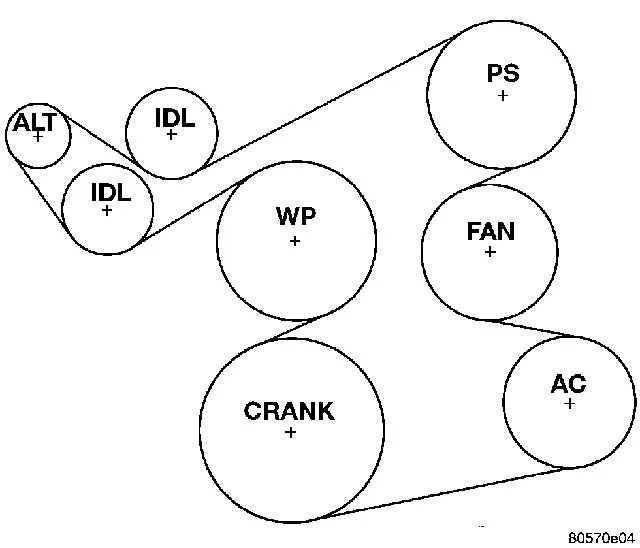
Begin by opening the hood and positioning the vehicle on a level surface with the engine off. The 2000 Jeep Cherokee uses a serpentine belt system for most accessories and a separate timing belt inside the engine. Identify the serpentine belt first, which drives the alternator, power steering pump, water pump, and air conditioning compressor.
Locate the serpentine belt at the front of the engine. It wraps around the crankshaft pulley at the bottom, then passes over the tensioner pulley, and loops around each accessory pulley. Check the belt path diagram often found on a sticker inside the engine compartment or in the owner’s manual to confirm routing.
Next, identify the timing belt by removing the engine’s front cover. This belt connects the crankshaft to the camshaft, controlling valve timing. Inspect the pulleys and tensioners around it to ensure proper alignment. The timing belt is critical and should be replaced according to mileage recommendations.
On models with a separate accessory belt for the air conditioning compressor, locate the smaller belt along the passenger side of the engine. It wraps around the compressor pulley and a tensioner. Verify correct tension by checking the deflection, usually about half an inch when pressed in the middle.
Label each belt with its function for easier reference during maintenance. Ensure all pulleys spin freely and there are no cracks or frays in the belts. Correct identification and inspection prevent slippage, noise, and potential engine damage.
Step-by-Step Belt Removal and Installation Procedures
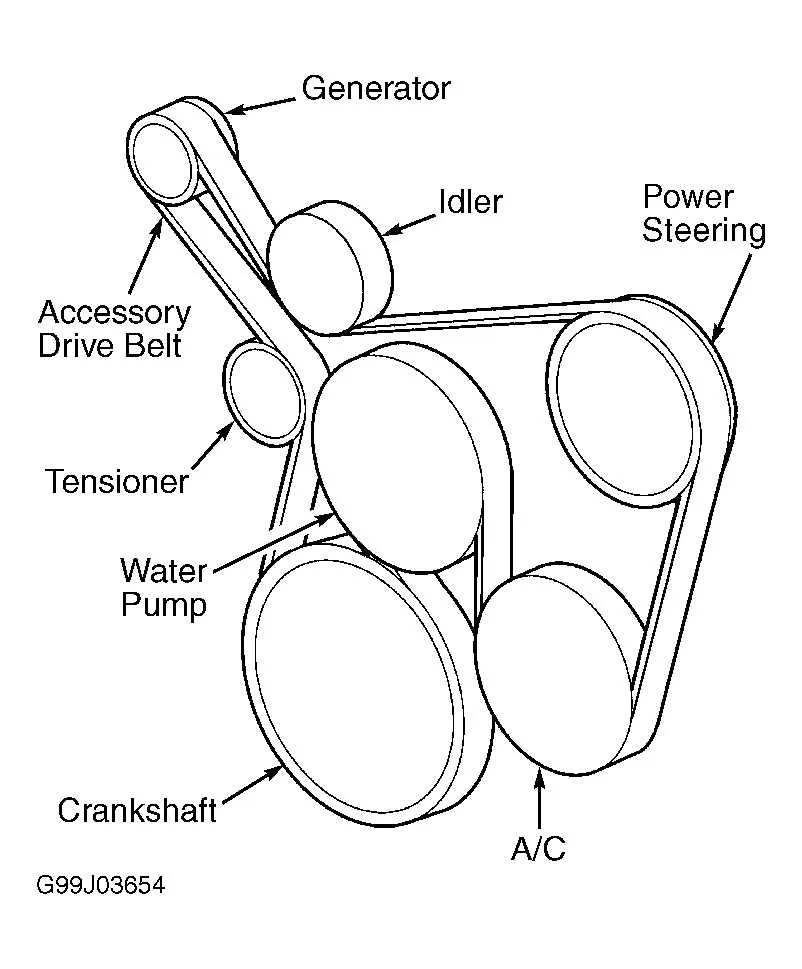
Begin by disconnecting the negative battery cable to prevent accidental electrical contact. Locate the serpentine belt routing diagram near the radiator or on the underside of the hood to ensure correct installation orientation.
Use a 3/8-inch or 1/2-inch ratchet on the belt tensioner pulley to relieve tension. Rotate the tensioner clockwise to release pressure, then slide the belt off the pulleys, starting with the easiest-to-access accessory pulley.
| Step | Action | Notes |
|---|---|---|
| 1 | Disconnect negative battery terminal | Prevents electrical shorts and accidental starts |
| 2 | Identify belt routing | Refer to diagram or photograph belt path before removal |
| 3 | Release tensioner | Use ratchet or breaker bar; rotate slowly to avoid snapping |
| 4 | Remove belt | Start with accessory pulley; keep belt flat to avoid twisting |
| 5 | Inspect pulleys and tensioner | Check for wear, wobble, or misalignment before installing new belt |
| 6 | Install new belt | Follow routing diagram; position around crankshaft pulley last |
| 7 | Release tensioner carefully | Ensure belt seats properly on all pulley grooves |
| 8 | Double-check alignment | Rotate engine manually two full revolutions; confirm belt stays seated |
| 9 | Reconnect battery | Test engine at idle; listen for slippage or unusual noises |
For serpentine belt replacement, confirm the belt size matches the OEM specification: 4.0L engines require a 101-inch belt, while 4.0L High Output engines use a 106-inch belt. Inspect all tensioners and pulleys for smooth rotation; replace any worn components to prevent premature belt failure.
During installation, maintain tensioner engagement at all times. Avoid forcing the belt onto pulleys; adjust the routing slightly if necessary to prevent cross-threading. After installation, run the engine for several minutes, then recheck the belt’s seating and tension.
Troubleshooting Common Belt Wear and Alignment Issues
Inspect the serpentine and accessory belts regularly for visible cracks, fraying, or glazing. Small cracks on the ribbed side indicate aging, while shiny, smooth surfaces suggest slippage.
Check belt tension using a gauge or by applying moderate pressure at the midpoint. A properly tensioned belt should deflect about 1/2 inch (12 mm) for every 12 inches (30 cm) of span. Excessive slack can cause slipping, while overtightening increases wear on pulleys and bearings.
Examine pulley alignment carefully. Misaligned pulleys often cause uneven belt wear or a chirping sound. Use a straightedge across the pulley faces to detect offset. Even a few millimeters of deviation can lead to premature failure.
Listen for unusual noises during engine operation:
- Squealing at startup often indicates belt slippage or contamination from oil or coolant.
- Chirping during acceleration may signal a misaligned or worn tensioner.
- Rubbing or scraping noises can result from belts contacting pulley edges.
Inspect the tensioner and idler pulleys for smooth rotation. Bearings that feel rough or have noticeable play require replacement to prevent belt misalignment.
Check for contamination on the belt surface. Oil, coolant, or power steering fluid accelerates degradation. Clean the surrounding area and replace the belt if fluid exposure has occurred.
Replace any belt showing uneven wear patterns, glazing, or cracks. Always install a new belt following the correct routing diagram for the 2000 Jeep Cherokee, ensuring proper engagement on all pulley grooves.
After installation, recheck tension and alignment. Run the engine for a few minutes, then inspect the belt again to confirm consistent contact and absence of slipping or noise.