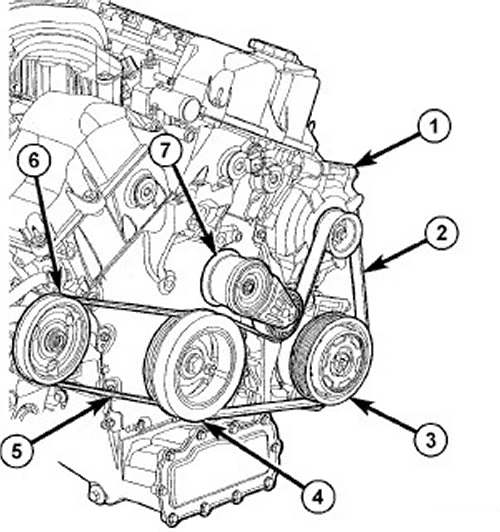
Locate the serpentine belt routing for the 2011 Dodge Journey by referencing the manufacturer’s diagram. This diagram identifies the path across the alternator, power steering pump, air conditioning compressor, and crankshaft pulley, ensuring accurate installation. Misalignment or incorrect routing can lead to premature wear or system failures.
Confirm belt type and length before removal. The 2011 Dodge Journey uses a single serpentine belt for most engine configurations, but some V6 models require specific tensioner adjustments. Matching the exact part number helps avoid tension issues and reduces the risk of slipping or squealing noises.
Follow the diagram during installation. Begin by releasing tension with a wrench or serpentine tool on the tensioner pulley, then loop the belt according to the diagram. Ensure each pulley groove aligns with the belt ribs to maintain consistent power transfer. Double-check routing before starting the engine.
Routine inspection improves longevity. Examine the belt for cracks, fraying, or glazing. Regularly checking belt tension and alignment prevents unexpected breakdowns and maintains the performance of the alternator, water pump, and other critical components.
2011 Dodge Journey Belt Diagram
Refer directly to the belt routing diagram to replace or inspect your serpentine belt. For the 2011 Dodge Journey with a 3.6L V6 engine, the belt wraps around the crankshaft pulley, alternator, power steering pump, air conditioning compressor, and tensioner. The tensioner sits on the passenger side and requires a 15mm wrench to release tension for belt removal.
Ensure the belt aligns precisely with each pulley groove. Misalignment can cause squealing or premature wear. The routing follows a clockwise path starting at the crankshaft: first to the power steering pump, then to the tensioner, up to the alternator, across the A/C compressor, and back to the crankshaft.
Inspect the belt for cracks, fraying, or glazing before reinstalling. Replace the tensioner if it shows excessive movement or noise. Tighten the belt by rotating the tensioner back into position and confirm all pulleys spin freely without slippage. Keeping a printed diagram near your workspace speeds up installation and ensures accuracy.
Locating the Serpentine Belt on a 2011 Dodge Journey
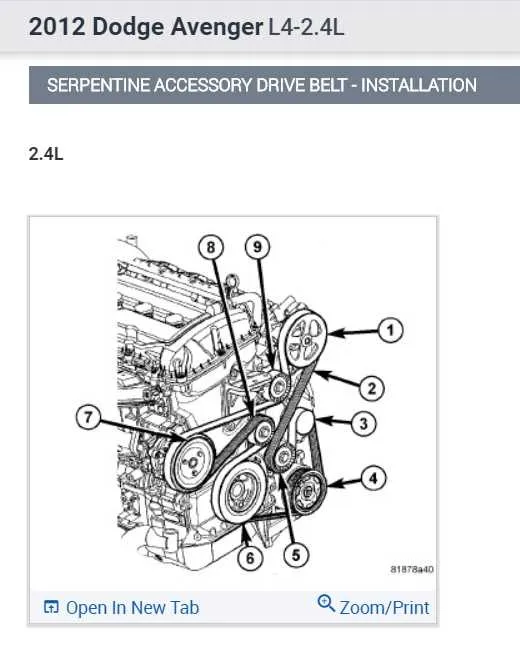
Locate the serpentine belt by opening the hood and standing in front of the engine. The belt runs along the front of the engine, connecting the alternator, power steering pump, water pump, and air conditioning compressor. Look for a long, continuous rubber belt with multiple grooves on one side.
On the 2.4L 4-cylinder engine, the belt wraps around the crankshaft pulley at the bottom, then loops over the alternator on the upper left, the water pump at the center, and the tensioner pulley on the right side. The 3.6L V6 engine positions the belt similarly but includes an extra idler pulley near the center to maintain proper tension.
Identify the tensioner pulley by its spring-loaded arm. It is located near the front right of the engine on the 4-cylinder and slightly lower on the V6. Use a wrench or socket to rotate the tensioner clockwise for the 2.4L or counterclockwise for the 3.6L, releasing the belt from one of the pulleys. This action allows you to inspect or replace the belt safely.
Check the belt for cracks, fraying, or glazing before reinstalling. Align the belt grooves carefully with each pulley, ensuring the belt follows the exact path shown on the diagram printed on the radiator support or in the owner’s manual. Confirm the belt sits fully in all pulley grooves and spins smoothly after engine start.
Step-by-Step Guide to Removing and Replacing the Belt
Loosen the tensioner using a 3/8-inch ratchet or breaker bar to relieve pressure on the serpentine belt. Position the tool in the tensioner arm squarely and pull clockwise to create slack.
Trace the belt path using the diagram located under the hood or a printed reference. This ensures proper routing during installation and prevents misalignment that can damage pulleys or accessories.
- Slide the belt off the smallest pulley first, usually the idler or alternator pulley.
- Work the belt over the remaining pulleys, keeping the tensioner pulled back to maintain clearance.
- Once removed, inspect each pulley for wear, cracks, or wobble and replace any faulty components before installing the new belt.
Place the new belt along the designated path, leaving the tensioner pulley for last. Ensure each rib sits snugly in the pulley grooves.
- Reposition the tensioner and slowly release the tool, letting the tensioner apply pressure on the new belt.
- Check alignment on all pulleys and confirm the belt sits evenly without twisting or gaps.
- Start the engine for a brief moment and observe the belt in motion. Listen for unusual noises and shut off the engine to make minor adjustments if necessary.
Inspect the belt again after a short drive to ensure proper seating and tension. Regular visual checks prevent premature wear and maintain optimal performance of engine accessories.
Identifying Tensioner and Pulley Positions for Proper Routing
Locate the serpentine belt tensioner on the passenger side of the engine near the front. It features a spring-loaded arm with a smooth pulley that maintains belt tension. Use a wrench on the tensioner bolt to release pressure before removing or installing the belt.
Identify the crankshaft pulley at the bottom center of the engine; this drives all other pulleys. The alternator pulley sits on the upper passenger side, while the water pump pulley positions slightly left of center. The power steering pulley lies directly above the crankshaft pulley on the driver’s side. Confirm each pulley matches the diagram specific to the 2011 Dodge Journey 3.6L engine for accurate alignment.
Route the belt around the pulleys following the proper path: ensure the ribbed side of the belt contacts ribbed pulleys, and the smooth side contacts smooth pulleys. Align the belt on each pulley fully within the grooves to prevent slippage. After placement, release the tensioner slowly to apply tension, then rotate the crankshaft pulley by hand to verify smooth movement and proper seating.
Check the belt for consistent tension along the entire length. The tensioner should compress slightly under pressure but return to its resting position without excessive slack. Inspect all pulleys for wear, noise, or misalignment before final operation.