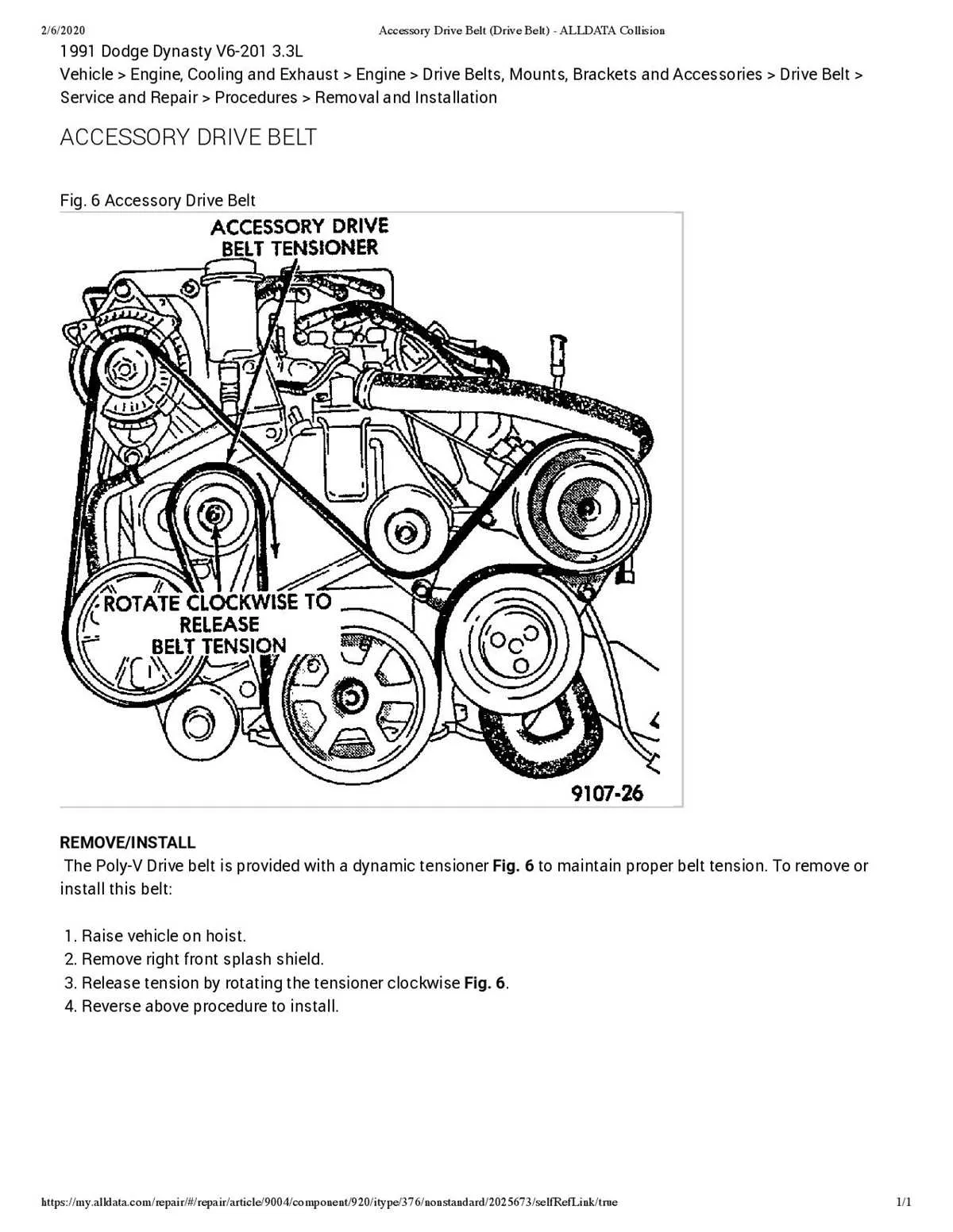
Locate the serpentine belt by identifying the front of the engine where it wraps around multiple pulleys including the alternator, power steering pump, and air conditioning compressor. Use the vehicle’s engine layout to match each pulley correctly with the belt routing.
Check the belt for visible signs of wear such as cracks, fraying, or glazing. Replace it if any damage is observed. Tension is critical: ensure the belt maintains firm contact with all pulleys without excessive slack. A properly routed belt reduces the risk of slippage and component damage.
Refer to the 2012 Jeep Patriot serpentine belt diagram for exact pulley sequence. Follow the diagram carefully to loop the belt around the tensioner last. Use a tensioner tool to release and secure the belt, ensuring it seats fully in each pulley groove. Inspect alignment after installation to prevent misalignment or uneven wear.
Regularly inspect the serpentine belt every 20,000 miles or according to the maintenance schedule. Correct routing, tension, and timely replacement maintain smooth engine operation and prevent unexpected breakdowns.
2012 Jeep Patriot Serpentine Belt Diagram Detailed Guide
Locate the serpentine belt routing diagram on the engine compartment or in the owner’s manual to ensure proper alignment. The 2012 Jeep Patriot uses a single serpentine belt that drives the alternator, power steering pump, air conditioning compressor, and water pump.
Begin at the crankshaft pulley and follow the diagram clockwise. Loop the belt around the alternator, then down to the tensioner pulley. Continue to the air conditioning compressor pulley, then to the power steering pump, and finally over the water pump pulley before returning to the crankshaft.
Check that the belt sits squarely in each pulley groove. Misalignment can cause squealing, premature wear, or slipping. Use a straight edge or visual inspection to confirm the belt tracks correctly on all pulleys.
Adjust the automatic tensioner by releasing its locking mechanism and allowing it to apply tension. Verify that the belt has approximately ½ inch of deflection at the longest span. Ensure the tensioner moves smoothly and maintains constant pressure.
After installation, rotate the crankshaft manually for two full revolutions to confirm the belt maintains proper routing and tension. Inspect all pulleys for smooth operation and absence of damage or debris before starting the engine.
Locating and Identifying All Pulleys and Belts
Begin by positioning yourself at the front of the engine bay and locate the serpentine belt routing diagram on the radiator support or under the hood. This diagram provides the exact path for the belt across all pulleys.
Identify each pulley and belt in the following order:
- Crankshaft Pulley: Positioned at the bottom center, this pulley drives the main belt. Verify its grooves match the belt width.
- Alternator Pulley: Usually on the upper left side, it powers the alternator. Check the tensioner alignment near it.
- Power Steering Pump Pulley: Found on the upper right side. Ensure it rotates smoothly without wobbling.
- AC Compressor Pulley: Located lower on the right. Confirm the belt sits fully in the pulley grooves.
- Water Pump Pulley: Centered or slightly offset, often behind the crankshaft pulley. Inspect for signs of leakage or wear.
- Tensioner Pulley: Typically spring-loaded, positioned near the center top. Test for proper belt tension and smooth rotation.
- Idler Pulley(s): Positioned along the belt path to guide and maintain tension. Rotate manually to check for roughness or noise.
Trace the belt along the diagram, confirming each pulley matches the routing path. Use a flashlight to spot hidden pulleys and verify belt alignment. Adjust the tensioner as needed to ensure the belt sits snugly and runs without slipping or misalignment.
After locating all pulleys and routing the belt correctly, manually rotate the crankshaft two full turns to confirm smooth operation and consistent belt tracking.
Step-by-Step Serpentine Belt Replacement Process
Locate the belt routing diagram on the engine compartment or refer to the service manual. This ensures correct installation and prevents misalignment.
Release belt tension using a 3/8-inch ratchet or breaker bar on the tensioner pulley. Rotate the tensioner clockwise to relieve tension and slide the belt off the pulleys.
Inspect pulleys and tensioner for wear or damage. Spin each pulley by hand to check for rough spots or noise. Replace any defective components before installing the new belt.
Compare the new belt with the old one. Confirm length, rib pattern, and width match the original to prevent slipping or premature wear.
Install the new belt following the routing diagram. Start at the crankshaft pulley, then loop around the alternator, power steering pump, and air conditioning compressor as applicable. Ensure ribs align with pulley grooves.
Reapply tension by rotating the tensioner pulley and sliding the belt into place. Slowly release the tensioner to engage the belt, confirming it seats properly on all pulleys.
Double-check alignment across all pulleys. Misaligned belts cause noise and accelerate wear. Adjust placement if necessary before starting the engine.
Test the installation by starting the engine and observing belt movement. Listen for squeals and watch for smooth operation across all pulleys. Shut off the engine and inspect again to ensure proper tension and alignment.
Checking Belt Tension and Alignment for Proper Operation
Begin by visually inspecting the serpentine belt for any signs of fraying, cracking, or glazing. A worn belt can slip even with correct tension. Locate the tensioner pulley and ensure it maintains firm pressure on the belt without excessive movement.
Use a ruler or belt tension gauge to measure deflection. For a 2012 Jeep Patriot, the belt should deflect approximately 1/2 inch (12 mm) when pressed at the midpoint between pulleys. Press gently and release to confirm consistent tension along the entire belt length.
Check alignment by observing that the belt sits fully in each pulley groove. Misalignment can cause squealing and accelerated wear. Turn the engine manually using a wrench on the crankshaft pulley and watch the belt track over all pulleys to confirm it runs true.
If tension is too low, adjust the tensioner according to the service manual. Over-tensioning can stress bearings and reduce belt life. After adjustment, recheck both deflection and alignment to ensure smooth operation and silent running.