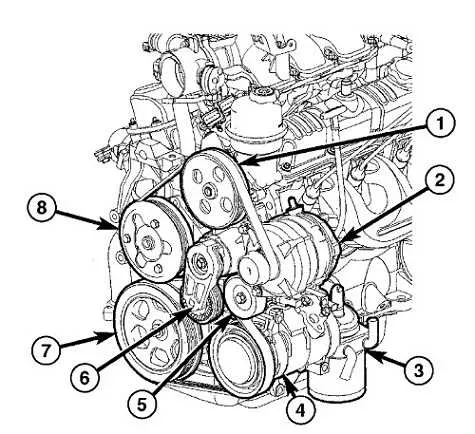
To replace the serpentine belt on a 2004 Dodge Ram 1500 with a 5.7 Hemi engine, it’s crucial to follow the correct routing pattern. The serpentine belt drives multiple components, including the alternator, power steering pump, and air conditioning compressor. Ensuring the belt is routed properly will prevent premature wear and reduce the risk of damaging other engine parts.
Step 1: Locate the Tensioner Pulley
Start by identifying the tensioner pulley, which is responsible for maintaining the correct belt tension. Use a wrench or serpentine belt tool to relieve tension and remove the old belt. Be cautious of the spring-loaded tensioner, as it will return quickly when the tension is released.
Step 2: Follow the Correct Routing
Referring to the diagram is essential for proper belt installation. The 5.7 Hemi engine uses a specific belt routing pattern that ensures smooth operation. The diagram shows how the belt wraps around each pulley, avoiding interference with other components. Be sure to check the diagram closely, as an incorrect routing could lead to slippage or damage to the belt.
Step 3: Reinstall the New Serpentine Belt
After correctly routing the new serpentine belt, apply tension to the tensioner pulley. Check the belt for proper alignment and ensure it is seated on all pulleys without any slack. A properly installed belt should sit flush with the grooves of each pulley, with no signs of wear or misalignment.
Using the correct diagram and installation process will help extend the lifespan of your serpentine belt and keep your Dodge Ram running smoothly. Always double-check the belt’s condition periodically to prevent future issues.
2004 Dodge Ram 1500 5.7 Hemi Serpentine Belt Diagram
To replace or inspect the serpentine belt on your 2004 Dodge Ram 1500 5.7 Hemi, refer to the following diagram. The belt routing is crucial for ensuring proper engine function. Start by locating the tensioner pulley, which is responsible for keeping the belt tight. The diagram shows the belt’s path around the alternator, power steering pump, A/C compressor, and water pump, along with the correct routing to avoid misalignment.
For a clear understanding of the serpentine belt path, follow these steps:
- The belt runs clockwise, starting from the crankshaft pulley.
- Next, it moves around the power steering pump pulley, followed by the alternator and A/C compressor.
- The belt continues to the tensioner pulley before wrapping around the water pump pulley.
- Ensure the belt is properly seated in all grooves to avoid slippage.
If you’re replacing the belt, double-check the alignment with the diagram before securing the tensioner. A misrouted belt can cause unnecessary wear and damage to the components. Always use the right tools and replace the belt if any visible damage or wear is found.
Understanding the Serpentine Belt Routing for 2004 Dodge Ram 1500 5.7 Hemi
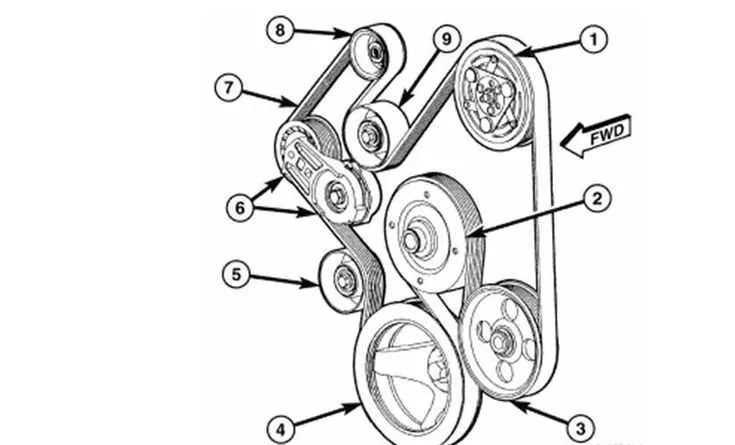
The serpentine belt routing on the 2004 Dodge Ram 1500 with the 5.7 Hemi engine is critical for proper engine operation. Incorrect belt routing can lead to overheating, power loss, or damage to essential engine components.
Follow these steps to correctly route the serpentine belt:
- Start at the crankshaft pulley at the bottom of the engine, which is the first point of contact for the belt.
- From the crankshaft, loop the belt around the A/C compressor pulley, which is located near the front passenger side.
- Next, guide the belt over the power steering pump pulley, positioned above the A/C compressor.
- Ensure the belt runs through the alternator pulley next, which is situated towards the upper front of the engine.
- Direct the belt over the tensioner pulley, which keeps the belt taut and secure during operation.
- Finally, finish by routing the belt around the idler pulley and back to the crankshaft pulley.
Double-check the alignment of the belt to make sure it sits properly on all pulleys. A misaligned belt can cause wear and reduce its lifespan.
If you are replacing the belt, inspect each pulley for wear or damage to prevent issues in the future. Replacing the serpentine belt at the recommended intervals can improve engine performance and extend component life.
How to Replace the Serpentine Belt on 2004 Dodge Ram 1500 5.7 Hemi
First, gather the necessary tools: a new serpentine belt, a socket wrench, a ratchet, and a belt tensioner tool or a breaker bar. Ensure the vehicle is parked on a flat surface, the engine is off, and the parking brake is engaged.
1. Locate the serpentine belt. On the 2004 Dodge Ram 1500 5.7 Hemi, it runs along the front of the engine, powering accessories like the alternator and power steering pump. Check the belt diagram for reference.
2. Use the belt tensioner tool to relieve tension from the belt. Insert the tool into the tensioner pulley and rotate it counterclockwise to loosen the belt. Once the tension is released, carefully remove the belt from the pulleys.
3. Inspect the old belt for any signs of damage or wear, like cracks or fraying. It’s important to compare the old and new belts to ensure they match in size and shape.
4. Install the new serpentine belt by following the diagram, making sure it runs smoothly over each pulley. Pay close attention to the direction of the grooves on the belt to align it properly with the pulleys.
5. Once the belt is positioned, release the tensioner to apply tension to the belt. Double-check that the belt sits securely on each pulley and that it is properly aligned.
6. Start the engine and visually inspect the belt while it’s running to ensure it’s operating correctly. Listen for any unusual sounds that might indicate improper installation.
7. If everything looks good, shut off the engine and double-check the belt for proper tension. If needed, adjust the tensioner to ensure the belt has the correct tightness.
Replacing the serpentine belt on a 2004 Dodge Ram 1500 5.7 Hemi is a straightforward task when following these steps. Regular maintenance will keep your engine running smoothly and prevent unnecessary breakdowns.
Troubleshooting Serpentine Belt Issues on 2004 Dodge Ram 1500 5.7 Hemi
If your 2004 Dodge Ram 1500 5.7 Hemi is experiencing serpentine belt issues, start by inspecting the belt for visible damage. Cracks, fraying, or wear spots are common signs that the belt needs replacement.
Next, check the belt tension. A loose or worn-out tensioner can cause the belt to slip or squeal. To diagnose, press on the belt with your fingers; it should have slight tension but not too much slack. If it’s too loose, the tensioner may need to be replaced.
Look for misalignment in the pulleys. A misaligned pulley can cause uneven wear on the serpentine belt and can even lead to premature failure. If the belt appears to be riding off-center or making noise, a misalignment could be the cause. Inspect the pulleys for wear or damage and replace any that are faulty.
Inspect all other components driven by the serpentine belt, such as the alternator, power steering pump, and air conditioning compressor. If any of these components are failing, they could be placing additional strain on the belt, leading to failure. Pay close attention to the bearings and seals on each component for signs of wear.
If your belt is still slipping after checking all components, consider testing the belt’s tension using a belt tension gauge. This can help you confirm whether the belt is sufficiently tight and performing as expected.
Lastly, replace the serpentine belt regularly as part of your vehicle’s maintenance schedule. The manufacturer’s recommended interval is typically around 60,000 to 100,000 miles, depending on driving conditions. Routine replacements help prevent unexpected breakdowns.