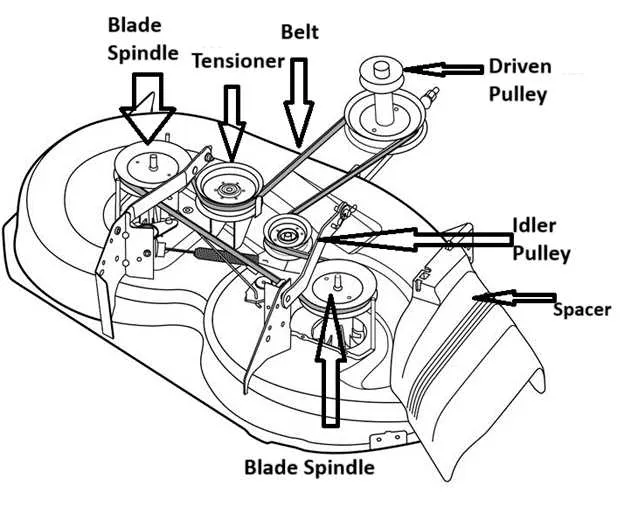
Check the drive belt tension spring first if the mower shows signs of slipping or uneven movement. A worn or misplaced spring can cause the belt to lose grip, which directly affects power transmission to the wheels. By following the diagram, you can quickly locate the spring and compare its position with the correct layout.
The diagram highlights each connection point, including the spring anchor and pulley attachment. Pay close attention to the spring angle and length under tension, since incorrect placement often leads to premature wear. If the spring appears stretched or bent, replacement is the fastest way to restore smooth operation.
When installing a new spring, use the diagram as a step-by-step reference. Align the belt around the pulleys first, then hook the spring into place while keeping steady pressure to avoid misalignment. This ensures the drive system runs with proper tension and prevents unnecessary strain on the pulleys and belt.
Keeping the spring in the correct position not only extends belt life but also improves mowing performance. The diagram provides a clear layout that simplifies inspection and replacement, helping you avoid guesswork during maintenance.
Cub Cadet ZT1 Drive Belt Tension Spring Diagram
Check the spring location before removing any parts. The drive belt tension spring on the Cub Cadet ZT1 connects between the idler arm and the frame bracket, keeping the belt tight during operation. A clear diagram helps confirm that the spring is seated correctly on both ends.
Follow the belt routing from the engine pulley to the transmission pulleys, then locate the idler arm. The spring usually hooks into the small hole near the arm pivot and stretches to a fixed mounting point on the mower frame. If installed backward, the belt may slip or wear unevenly.
When replacing, use pliers to hold the spring firmly and avoid stretching it by hand. Secure one end to the idler arm first, then attach the other side to the frame anchor point. Always compare with the diagram before tightening any guards or covers.
A correct spring setup ensures smooth tension across the entire belt path. Referencing the diagram during reassembly prevents misalignment, which can shorten belt life and reduce mower performance.
Identifying the Correct Tension Spring Placement on the ZT1 Model
Attach the long hook of the spring to the anchor hole on the mower frame near the right side of the engine pulley. This fixed point keeps the spring secure during operation.
Connect the opposite end of the spring to the idler arm bracket. The correct spot is the round opening positioned directly behind the flat idler pulley. This placement ensures proper belt tension as the arm pivots under load.
- Verify that the spring does not rub against the belt during engagement.
- Check that the coil sits evenly without twisting or bending at the hook ends.
- Make sure the idler pulley moves freely after the spring is connected.
If the belt feels loose after installation, confirm that the spring is hooked into the rear hole of the idler bracket and not the front slot, as misplacement here leads to slack and premature wear.
After positioning, manually rotate the drive belt to confirm smooth motion and stable tension across the pulleys before operating the mower.
Step-by-Step Guide to Accessing and Viewing the Belt Path
Park the mower on a flat surface, engage the parking brake, and remove the ignition key before working near the deck.
Lift the mower deck to its highest position using the deck lift lever. This provides the necessary clearance for inspection and tool access.
Detach the mower deck by pulling the release pins on both sides and sliding the deck out from under the frame. Keep the deck flat while moving it to avoid straining the belt or pulleys.
Locate the drive belt tension spring. Use pliers to carefully relieve tension and unhook the spring from its anchor point. This exposes the full belt path without risk of sudden movement.
Follow the belt as it runs around the pulleys. Identify the PTO pulley at the engine, the idler pulleys, and the transmission pulley. Trace the route visually or take a clear photo for later reference.
Check the belt alignment while viewing the path. Make sure the belt sits correctly in the pulley grooves and does not show fraying or cracks. If the belt path looks misaligned, note the specific pulley positions before reinstalling the spring.
Reattach the tension spring with steady pressure, ensuring it locks securely in place. Slide the deck back under the mower, reconnect the release pins, and lower the deck for normal use.
Common Issues with Spring Alignment and How to Adjust Them
Check if the spring sits evenly on both anchor points; a tilted angle causes the belt to ride off track and slip. Adjust the bracket position by loosening its bolt, shifting slightly, and retightening until the spring runs parallel with the belt path.
Inspect for excessive stretch, as an elongated spring reduces tension and throws off alignment. Replace the spring if it measures longer than the factory specification by more than 5%. Always compare with a new part when possible.
Look for uneven wear on the spring hooks. If one side shows flattening or bending, swap the spring immediately, since a deformed hook prevents consistent alignment.
If the spring continues to pull off center, verify the idler arm pivot. A stiff or rusted pivot restricts movement and twists the spring. Lubricate the joint with a lithium-based grease and confirm smooth rotation before reinstalling the spring.
After adjustment, engage the drive system manually by turning the pulley and observing belt tracking. The belt should remain centered without wobble or sudden slack. Repeat fine adjustments until alignment is stable across the full pulley rotation.