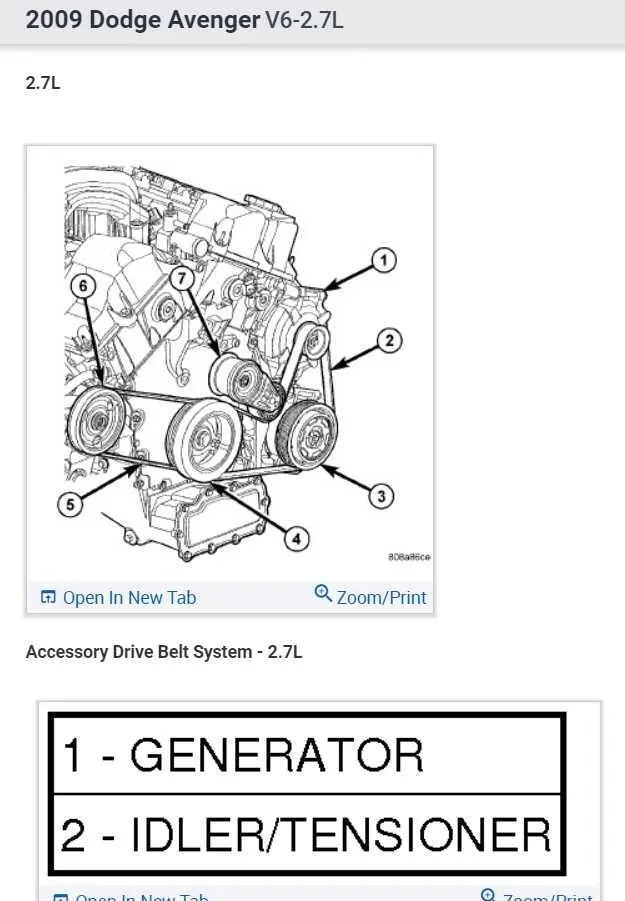
Check the routing of the serpentine belt on the 2013 Dodge Avenger with the 2.4L engine before removing the old one. The belt follows a specific path across the alternator, power steering pump, idler pulley, crankshaft pulley, and tensioner. Incorrect installation can cause squealing, charging issues, or overheating.
Locate the automatic belt tensioner on the passenger side of the engine. Use a 15mm wrench or socket to rotate the tensioner clockwise and release pressure. This step allows you to remove the worn belt without damaging the pulleys or tensioner assembly.
Inspect each pulley for wear or misalignment while the belt is off. A rough surface or wobbling pulley can shorten the lifespan of the new belt. Replace the belt with a 6-rib serpentine model designed for the 2.4L Avenger, following the diagram to ensure proper fit.
After installation, rotate the crankshaft manually to confirm correct alignment on every pulley. Then start the engine and watch the belt’s path closely. A steady rotation without side movement confirms that the belt is seated correctly and tension is set properly.
2013 Dodge Avenger 2.4 Belt Diagram
Check the serpentine belt routing before removing the old belt to avoid mistakes during installation. The 2013 Dodge Avenger 2.4 uses a single serpentine belt that powers the alternator, A/C compressor, power steering pump, and water pump.
- The belt runs from the crankshaft pulley at the bottom to the A/C compressor on the passenger side.
- From the A/C compressor, it loops up around the alternator.
- It then routes across the idler pulley and around the power steering pump.
- The belt continues across the water pump pulley before reaching the tensioner.
- Finally, it returns to the crankshaft pulley.
Always rotate the tensioner clockwise with a wrench to release pressure before sliding the belt off. When installing the new belt, confirm each groove sits correctly on the pulleys. After installation, rotate the crankshaft manually one full turn to make sure the belt aligns without slipping.
- Locate the tensioner on the passenger side near the alternator.
- Use a 15mm wrench or socket to relieve tension.
- Remove the old belt carefully without forcing it.
- Route the new belt according to the diagram, leaving the tensioner pulley for last.
- Apply tension, then double-check alignment on every pulley.
Replacing the serpentine belt every 60,000 to 90,000 miles helps prevent breakdowns caused by cracks or stretching. Inspect the pulleys and tensioner at the same time, as worn components can shorten the life of the new belt.
Serpentine Belt Routing for 2.4L Engine
Follow the routing from the crankshaft pulley upward to the alternator, then across to the idler pulley. From the idler, direct the belt toward the power steering pump and continue downward around the A/C compressor. After the compressor, loop it back to the tensioner pulley, and finally return it to the crankshaft pulley.
Check that the belt sits correctly in every groove before applying tension. Use the tensioner to relieve pressure when installing or removing the belt, and confirm alignment visually across all pulleys to avoid uneven wear or noise. Replace any pulley that shows wobbling, cracks, or rough movement before fitting a new belt.
Tip: Keep a diagram of this routing in the engine bay or service manual for quick reference during future replacements.
Step-by-Step Belt Replacement Procedure
Disconnect the negative battery cable to prevent accidental starts. Use a socket wrench to remove the plastic engine cover for clear access to the belt area.
Locate the serpentine belt routing diagram under the hood or prepare a quick sketch before removing the old belt. This ensures correct reinstallation without guesswork.
Place a 15mm wrench on the tensioner pulley bolt, rotate it clockwise to release tension, and carefully slide the old belt off the pulleys. Keep hands clear of sharp edges.
Inspect all pulleys for wear or wobble. Spin each one to confirm smooth rotation. Replace any damaged pulley before installing the new belt to avoid premature failure.
Route the new belt following the diagram. Ensure it sits evenly in all pulley grooves, leaving the tensioner for last. Double-check alignment before applying tension.
Rotate the tensioner again, slip the belt over its pulley, then slowly release pressure so the belt tightens across the system. Verify proper tension without slack.
Reinstall the engine cover, reconnect the negative battery cable, and start the engine. Watch the belt to confirm smooth tracking and listen for unusual noises. Shut off the engine immediately if misalignment appears.
Common Issues with Belt Tension and Alignment
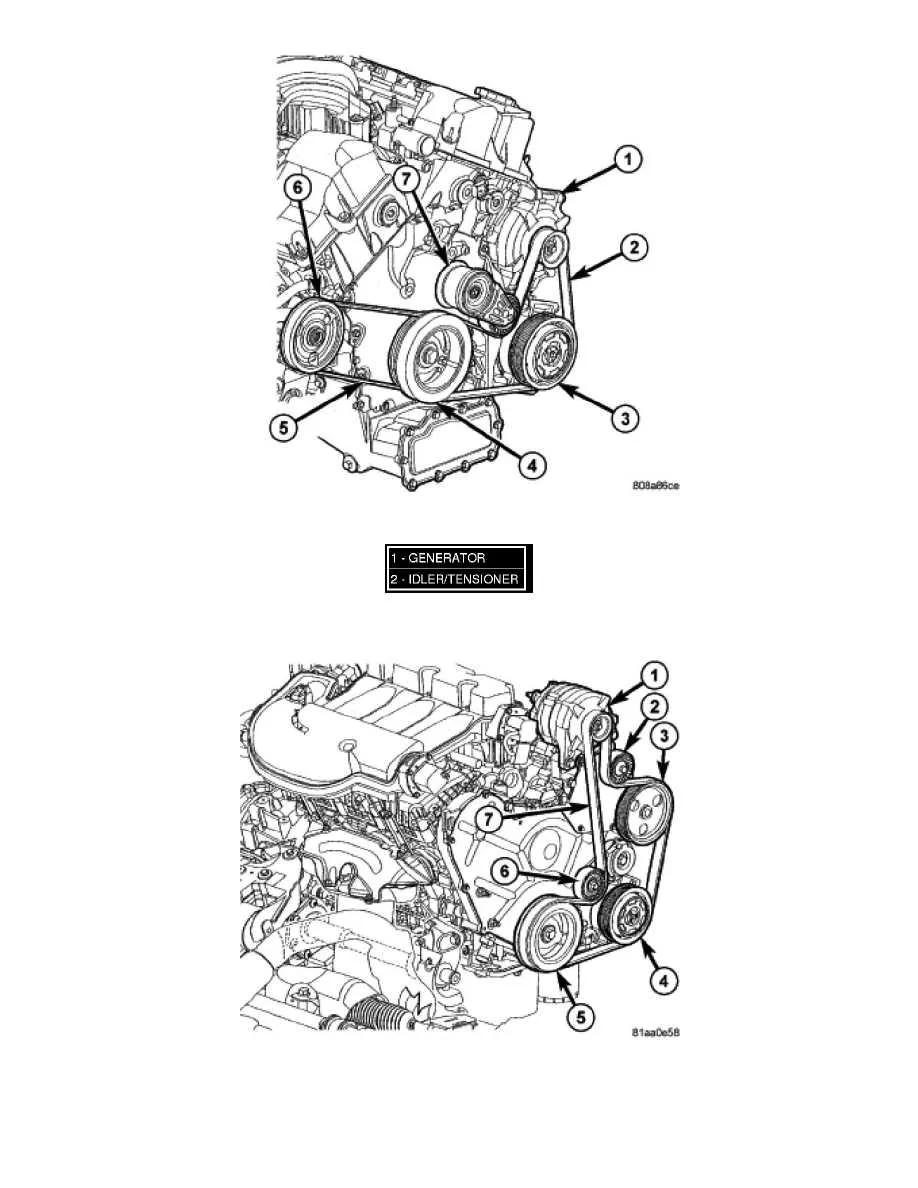
Check belt tension with a torque wrench after installation; the 2.4 engine requires a tight fit that allows only minimal deflection under thumb pressure. A loose belt often causes squealing at startup, while an overtightened belt strains the alternator and water pump bearings.
Inspect the automatic tensioner regularly. On the Dodge Avenger 2.4, the spring-loaded tensioner should move smoothly without sticking. A weak or seized tensioner leads to uneven wear and frequent belt slippage.
Confirm pulley alignment by placing a straight edge across multiple pulleys. Even a slight misalignment causes fraying on the belt edges and can throw the belt off track. Replace worn pulleys immediately, especially the idler pulley, which commonly develops bearing play.
After replacing the belt, run the engine for a few minutes and observe its tracking. If the belt drifts toward one side, recheck tensioner operation and pulley alignment before continuing to drive.