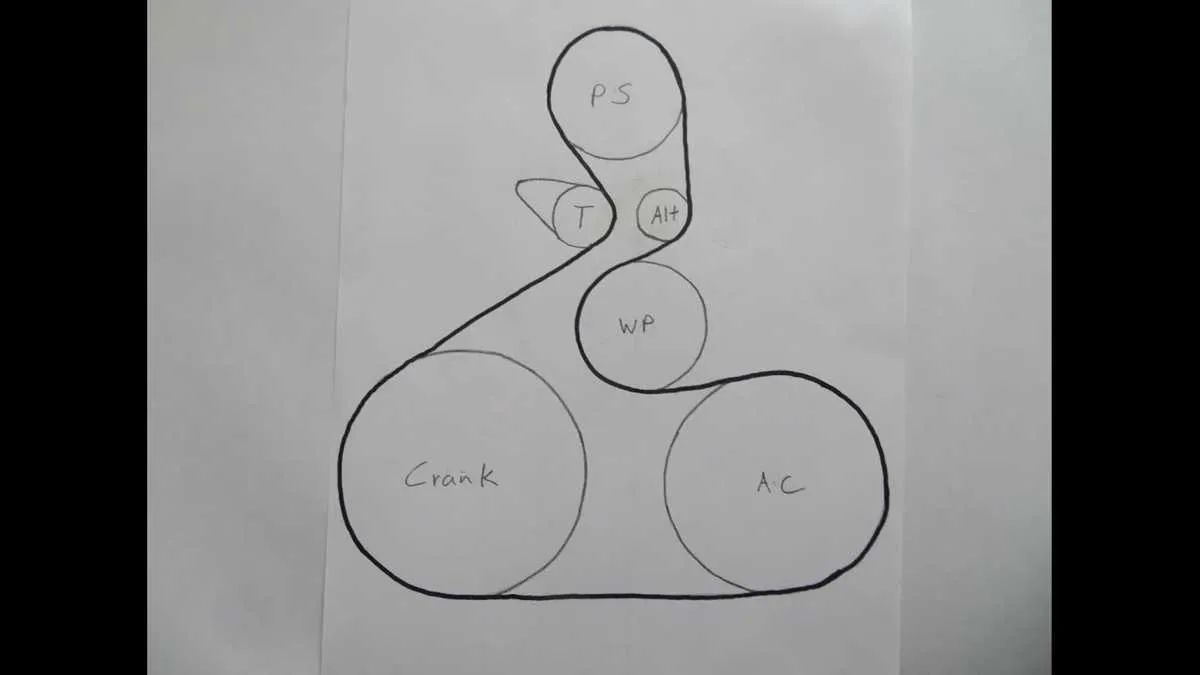
Locate the serpentine belt routing quickly with the 2012 Honda Accord diagram to ensure proper installation and avoid engine damage. This diagram clearly shows the path around the alternator, power steering pump, tensioner, and A/C compressor, helping you verify correct alignment before tightening the belt.
Follow the belt routing exactly as displayed to maintain proper tension and prevent slippage. The tensioner pulley adjusts automatically, but correct placement around each accessory pulley is key to smooth operation and longevity of your belt.
Refer to this diagram during replacement or inspection to identify worn pulleys or misrouted belts. Confirming the correct routing saves time and prevents costly repairs related to belt failure or accessory malfunction.
2012 Honda Accord Serpentine Belt Diagram
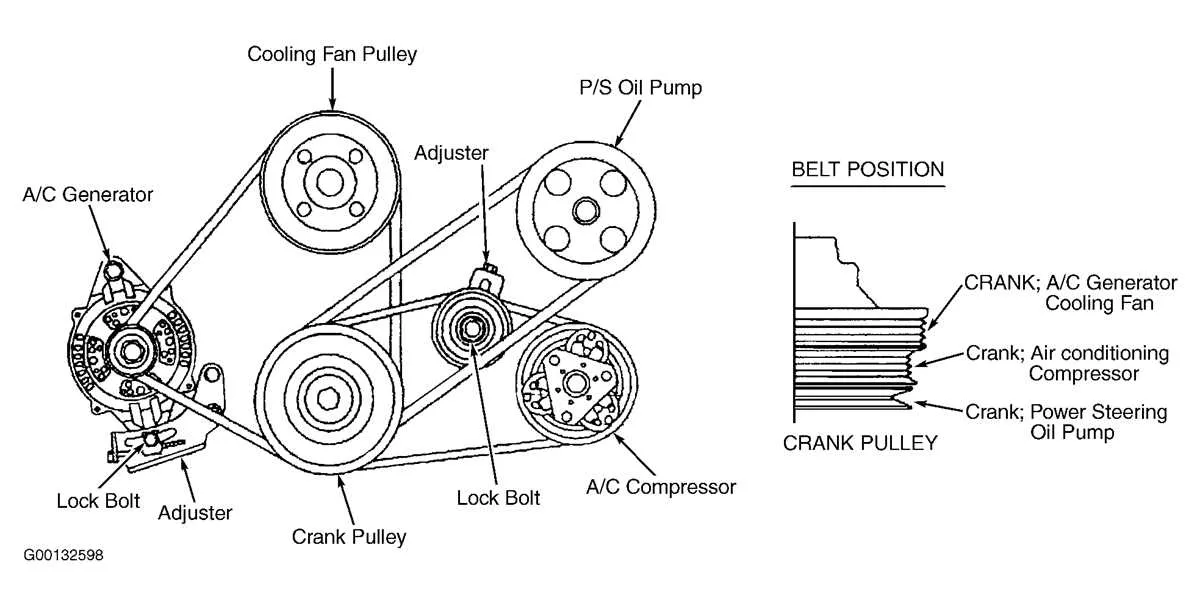
Locate the serpentine belt routing on the passenger side of the engine bay, usually displayed on a sticker near the radiator support or under the hood. The 2012 Honda Accord with a 4-cylinder engine features a single serpentine belt that drives the alternator, power steering pump, water pump, and air conditioning compressor.
The belt begins at the crankshaft pulley at the bottom center. From there, it wraps clockwise around the water pump pulley, then up and around the alternator pulley. Next, it moves to the power steering pump pulley before passing over the tensioner pulley. Finally, it completes the loop by returning to the crankshaft pulley.
The automatic belt tensioner maintains proper tension throughout the system. Use a wrench on the tensioner pulley bolt to relieve tension when replacing the belt. Confirm the routing matches the diagram exactly to avoid improper fit, which can cause premature wear or belt slipping.
If your Accord has a V6 engine, the routing differs slightly by including an additional pulley for the A/C compressor. Check the specific diagram for the V6 to ensure correct installation.
Keep the belt clean and inspect it regularly for cracks, glazing, or fraying. Replace the belt every 60,000 to 100,000 miles or if any signs of wear appear to maintain optimal engine performance.
Locating the Serpentine Belt on a 2012 Honda Accord Engine
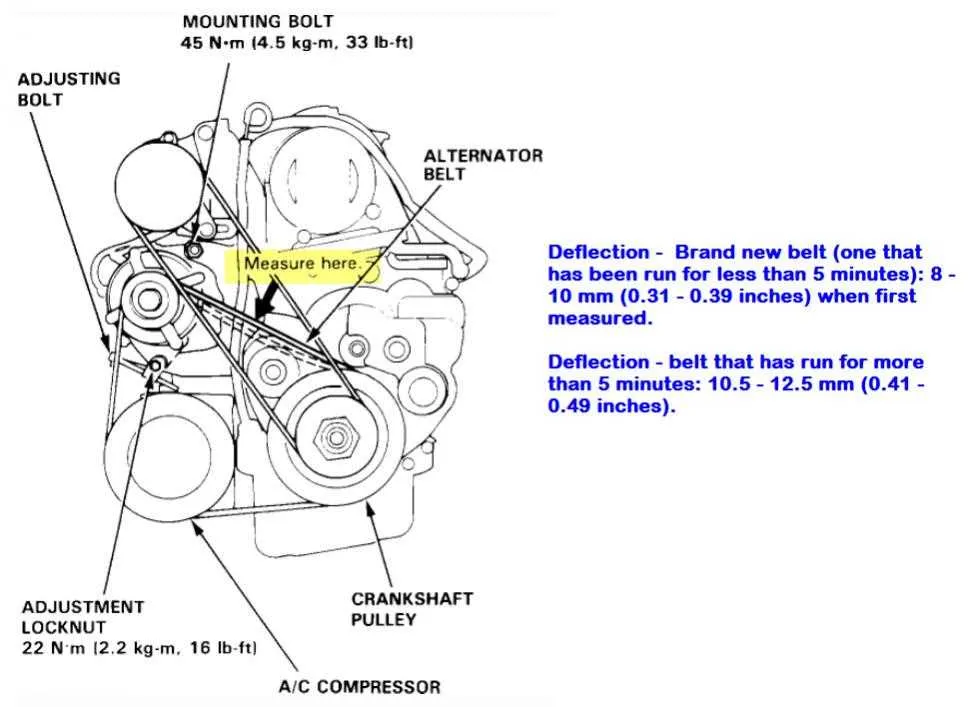
The serpentine belt on a 2012 Honda Accord runs along the front of the engine, wrapping around several key components. To find it, open the hood and face the engine bay from the front of the vehicle.
Look for a long, continuous rubber belt looping around pulleys connected to the crankshaft, alternator, power steering pump, and air conditioning compressor.
- The belt sits at the lower front section of the engine block.
- The crankshaft pulley, usually the largest pulley at the bottom center, drives the belt.
- Tracing the belt upwards leads to the alternator pulley, typically on the passenger side.
- The tensioner pulley keeps the belt tight and is usually found near the center or slightly to one side.
For easier identification, locate the smooth or ribbed surface of the belt and follow it along these pulleys. The belt’s path is continuous without breaks, contrasting with timing belts, which are often hidden behind covers.
In case of difficulty, refer to the belt routing diagram, often found on a sticker under the hood or in the owner’s manual, to confirm the exact positioning on your specific engine model.
Step-by-Step Guide to Reading the 2012 Honda Accord Serpentine Belt Diagram
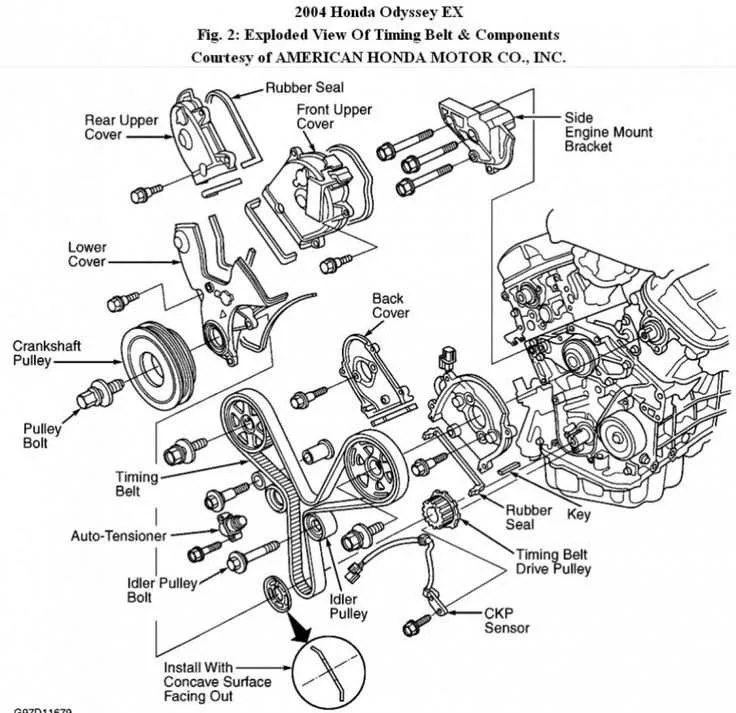
Locate the diagram inside the engine compartment or the owner’s manual. Identify each pulley by its label: crankshaft, alternator, power steering pump, water pump, and air conditioning compressor. Follow the belt path, which usually wraps around these pulleys in a continuous loop.
Trace the belt from the crankshaft pulley first, as it drives the entire system. Note the direction the belt moves around each component, ensuring it sits properly in the pulley grooves. Pay special attention to the tensioner pulley–its position adjusts the belt’s tightness.
Check the diagram for any idler pulleys, which help route the belt and maintain tension. Confirm the routing matches the diagram exactly to avoid misalignment or slipping. Misrouted belts cause noise and can damage components.
Use the diagram to identify the correct belt size and type. The 2012 Accord typically uses a multi-rib serpentine belt, and the diagram will specify the number of ribs and length. Confirm this before purchasing a replacement.
Refer to the diagram during installation to place the belt around each pulley correctly. Start by looping the belt over the crankshaft pulley and then move to the larger accessory pulleys. Use the tensioner to create slack when slipping the belt over the last pulley.
Double-check the belt’s alignment on each pulley groove according to the diagram. Misaligned belts wear out faster and reduce component efficiency. Rotate the crankshaft pulley manually a few times to ensure smooth movement and proper tension.
Keep the diagram accessible for future maintenance and troubleshooting. It serves as a reliable reference to maintain the serpentine belt system’s proper function on the 2012 Honda Accord.
Common Serpentine Belt Routing Variations for Different 2012 Honda Accord Models
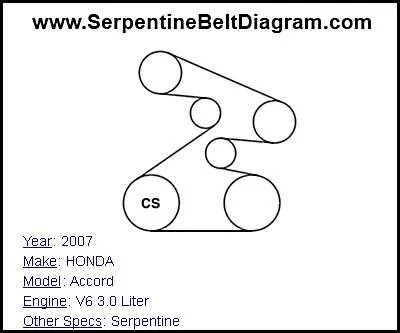
The serpentine belt routing differs primarily based on the engine type and accessory configuration of the 2012 Honda Accord. For the 2.4L 4-cylinder engine, the belt wraps around the crankshaft pulley, alternator, power steering pump, and the A/C compressor in a compact, clockwise pattern. This setup maintains tension through an automatic tensioner located near the power steering pump.
On V6 models with the 3.5L engine, the routing extends to accommodate an additional idler pulley and a larger A/C compressor. Here, the belt runs counterclockwise, looping around the crankshaft, alternator, water pump, and power steering pump before returning to the tensioner. This layout optimizes accessory drive performance and belt longevity.
For V6 models equipped with a hybrid system, expect a modified routing to integrate the electric motor’s pulley. The belt path incorporates a shorter loop with fewer pulleys but includes a reinforced tensioner to handle the hybrid’s load variations.
Consulting the exact diagram for your engine type is vital before attempting replacement. Always align the belt correctly around each pulley and confirm tensioner operation to prevent premature wear or belt slippage. Using OEM belts specific to the engine variant guarantees a precise fit and optimal function.