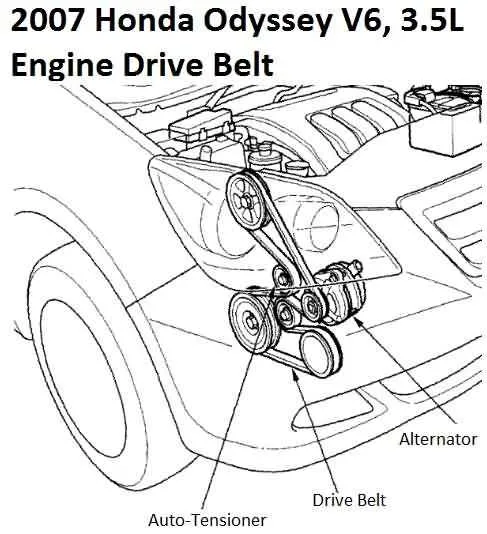
Locate the correct routing diagram for your 2007 Honda Odyssey before attempting any belt replacement or inspection. This diagram will show exact positions for the alternator, power steering pump, AC compressor, and tensioner pulley, preventing errors during installation.
Check belt condition regularly by inspecting for cracks, fraying, or glazing. A damaged serpentine belt can cause accessory failure, overheating, or loss of power steering. Use a bright light and a mirror if access is limited.
Follow torque specifications for the tensioner pulley when installing the belt. Over-tightening may shorten belt life, while under-tightening can cause slipping. For the 2007 Honda Odyssey, typical tensioner torque is around 25–35 ft-lbs, but always confirm with the service manual.
Use OEM or high-quality replacement belts to ensure durability. After installation, run the engine for several minutes and re-check alignment and tension to confirm proper function. This keeps the system reliable and extends the belt’s service life.
Detailed Serpentine Belt Diagram Guide for 2007 Honda Odyssey
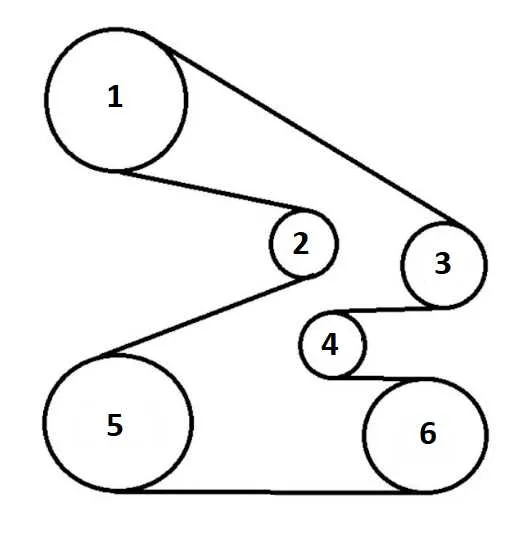
Use the correct serpentine belt routing to maintain proper performance and avoid premature wear. For the 2007 Honda Odyssey with a 3.5L V6 engine, follow the factory routing pattern precisely to ensure all components function properly.
The serpentine belt connects several critical components, including the alternator, power steering pump, air conditioning compressor, and crankshaft pulley. Incorrect installation can cause noise, slippage, or component damage.
- Belt Routing: The belt begins at the crankshaft pulley, moves over the power steering pump pulley, then the idler pulley, alternator pulley, air conditioning compressor pulley, and finally the tensioner pulley before returning to the crankshaft.
- Tensioner Position: The automatic tensioner is located near the lower right side of the engine and must be released with a 14mm wrench or serpentine belt tool to remove or install the belt.
- Belt Length: OEM replacement belt length is 104.5 inches with a width of 1/2 inch, typically part number 38920-RCA-A01 for this model.
- Wear Inspection: Check the belt for cracks, fraying, or glazing every 30,000 miles or during routine maintenance.
Use a clear diagram during installation. Most service manuals provide a routing image specific to the 2007 Honda Odyssey. Confirm alignment of all pulleys before final tensioning. Incorrect alignment will cause abnormal wear and noise.
Follow torque specifications for tensioner bolts and confirm the belt sits securely in pulley grooves. Run the engine briefly after installation and inspect for proper belt movement and tension.
Locate and Interpret the Serpentine Belt Diagram for 2007 Honda Odyssey
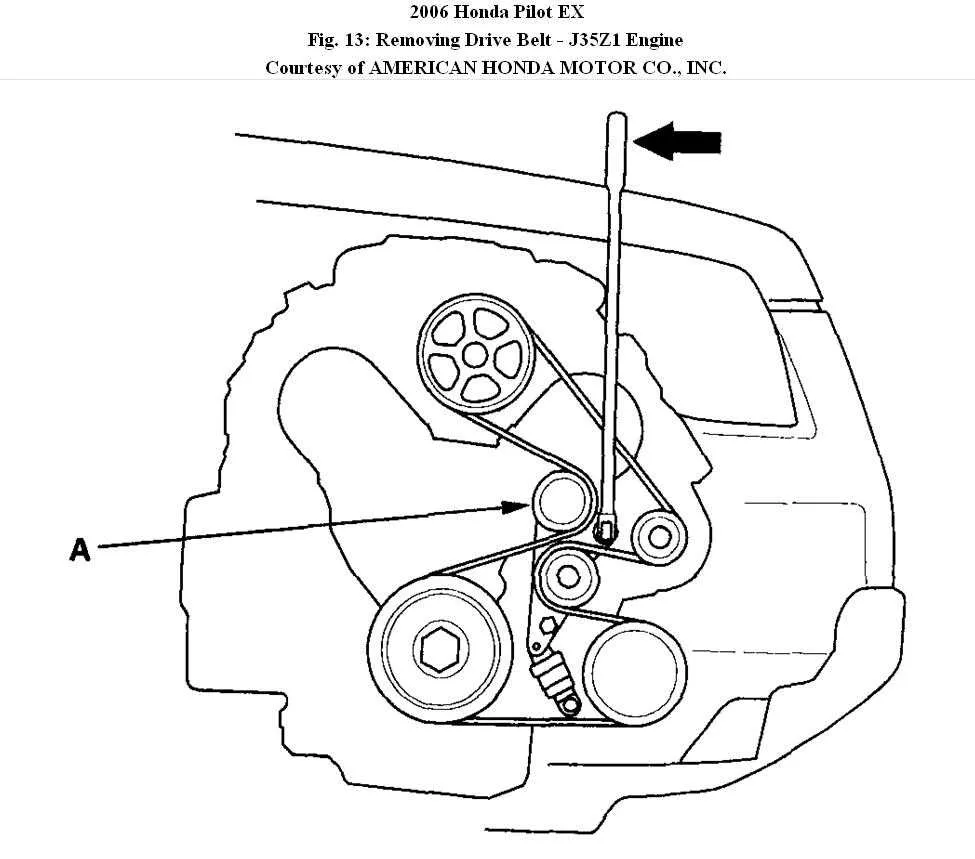
Find the serpentine belt diagram for the 2007 Honda Odyssey in the engine compartment area or inside the hood panel. Honda often places a printed diagram on a sticker near the radiator support or on the underside of the hood. If it is missing, check the owner’s manual or an authorized repair guide.
The diagram shows the belt routing across components such as the alternator, power steering pump, air conditioning compressor, and crankshaft pulley. Each pulley is labeled with a specific symbol or abbreviation. Compare these labels to the physical pulleys in your engine to confirm correct alignment.
Follow the diagram exactly to ensure the belt fits properly. Pay attention to tensioner position and direction arrows, as incorrect routing can cause noise, slipping, or premature wear. Use the diagram as a reference during installation and verify the belt path visually before operating the engine.
Step-by-Step Process to Replace the Serpentine Belt on 2007 Honda Odyssey
Locate the serpentine belt routing diagram, usually found on the radiator support or inside the engine compartment. This will guide proper installation of the new belt.
Disconnect the negative battery terminal using a 10mm wrench to prevent electrical hazards during the process.
Identify the belt tensioner on the front of the engine. Use a 3/8″ or 1/2″ breaker bar or ratchet to rotate the tensioner clockwise, relieving tension on the belt.
Slide the old serpentine belt off the pulleys and remove it completely, noting its path to compare with the new belt.
Inspect all pulleys and the tensioner for wear or damage. Replace any worn components to prevent premature belt failure.
Align the new serpentine belt according to the routing diagram. Ensure it sits correctly in each pulley groove without twisting.
Rotate the tensioner again to allow the belt to slip over the last pulley, then slowly release the tensioner to apply proper tension to the belt.
Double-check the belt routing and ensure proper seating on all pulleys. Misalignment can cause noise or damage.
Reconnect the negative battery terminal and start the engine for 1–2 minutes to verify smooth operation and correct belt tension.
Inspect the belt while the engine runs to confirm proper alignment and absence of abnormal noises. Adjust if necessary.
Common Serpentine Belt Issues and How to Troubleshoot Them on 2007 Honda Odyssey
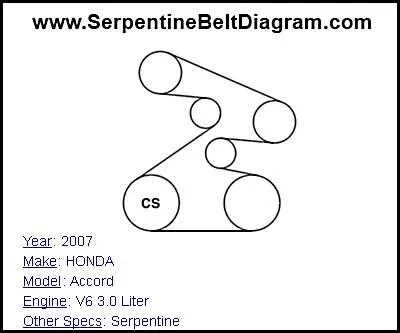
Inspect the serpentine belt regularly for visible cracks, fraying, or glazing. These signs indicate wear that can lead to belt failure and affect alternator, power steering, and air conditioning performance.
Listen for squealing noises during engine start or acceleration. Squeals often point to belt slippage or misalignment. Check belt tension and the condition of the tensioner pulley to correct this issue.
Look for uneven wear patterns on the belt’s ribs. This can result from pulley misalignment or worn components. Use a straightedge to confirm alignment and replace any damaged pulleys.
Check for oil or coolant contamination on the belt. Fluids can deteriorate belt material and cause slipping. Identify and repair the leak source, then replace the contaminated belt.
Monitor belt tension. A belt that feels loose or too tight can harm engine accessories. Use a tension gauge or follow Honda’s recommended procedure for adjusting tension on the 2007 Odyssey.
Replace the belt every 60,000 to 100,000 miles, depending on driving conditions and inspection results. Timely replacement prevents breakdowns and protects engine components.