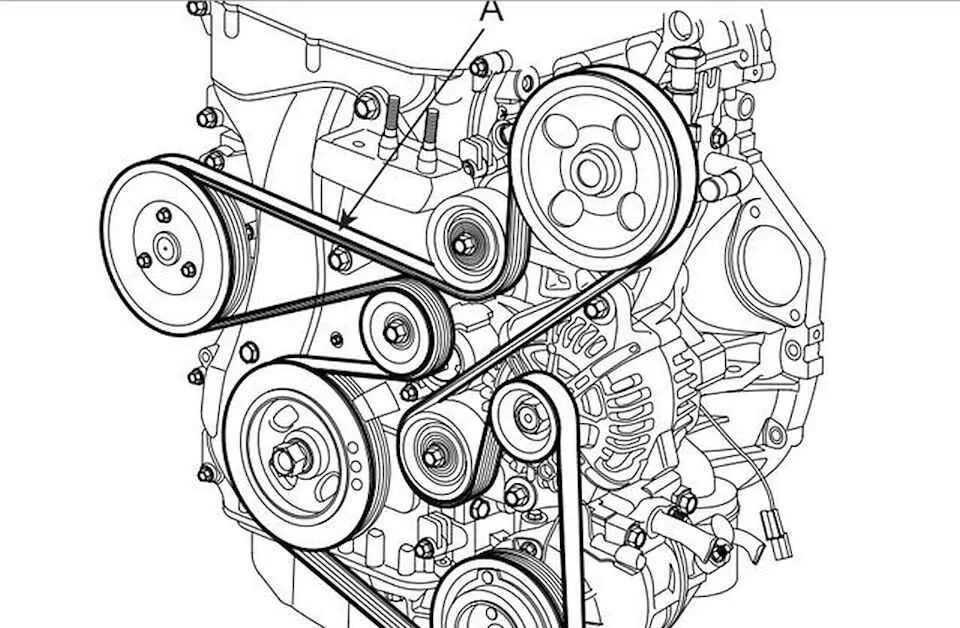
Check the serpentine belt condition on the 2016 Kia Soul 2.0 by inspecting for cracks, fraying, or glazing across the rubber surface. Replace the belt if you notice uneven wear or slack, as this can reduce performance of components like the alternator, water pump, or power steering pump.
Follow the routing diagram carefully during installation. The belt wraps around the crankshaft pulley, alternator, water pump, idler, and tensioner. A clear diagram ensures the belt sits correctly on each pulley groove and maintains the correct tension without slipping.
Use a breaker bar or socket wrench on the automatic tensioner to release pressure before removing the old belt. When fitting the new belt, guide it over the pulleys step by step, leaving the tensioner for last. After securing it, check alignment visually and run the engine briefly to confirm smooth rotation.
Inspect the tensioner and pulleys while the belt is off. Worn bearings or a weak spring in the tensioner can shorten the lifespan of a new belt. Replacing faulty parts during belt service saves time and prevents repeated issues.
2016 Kia Soul 2.0 Belt Diagram
Follow the routing diagram carefully to avoid misalignment and premature wear. The serpentine belt in the 2016 Kia Soul 2.0 connects multiple components, and each pulley must align correctly for proper tension.
- The crankshaft pulley drives the entire system and sits at the lower front of the engine.
- The alternator pulley is located on the upper left and receives power directly from the crankshaft pulley.
- The water pump pulley is positioned centrally and ensures continuous coolant circulation.
- The power steering pump pulley sits to the right side of the layout.
- The air conditioning compressor pulley is located at the lower right corner.
- The automatic tensioner sits on the belt path and maintains proper tension at all times.
Before placing the new belt, check that each pulley is free of cracks and debris. Route the belt according to the diagram, starting at the crankshaft pulley and working upward and across each accessory. Make sure the ribs sit correctly in the pulley grooves. After installation, apply pressure to the tensioner and verify proper alignment along the entire path.
Serpentine Belt Routing Layout for 2016 Kia Soul 2.0
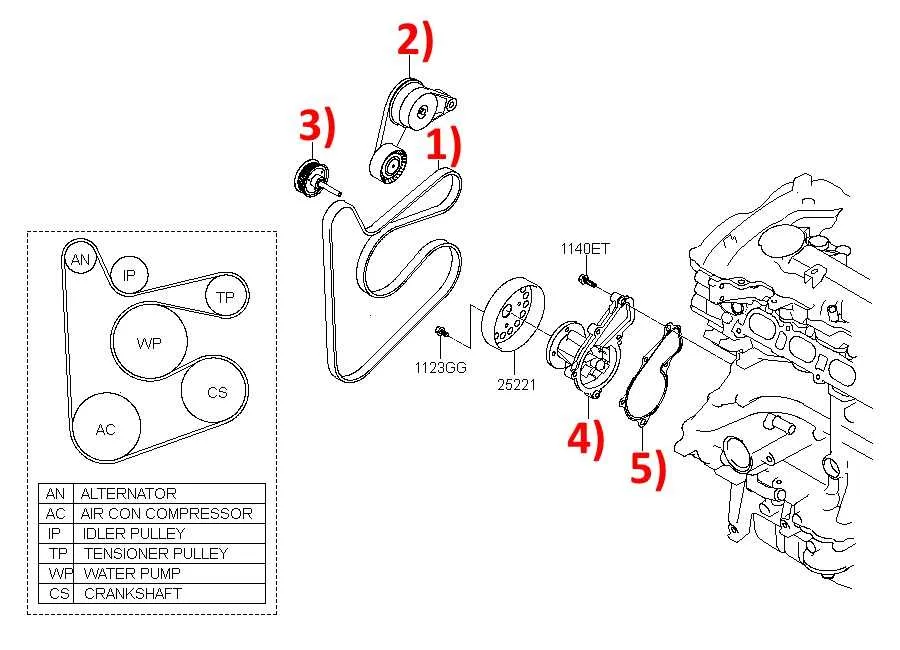
Follow the routing diagram that begins at the crankshaft pulley. The belt runs upward to the alternator, then across to the idler pulley. From there, guide it downward to the air conditioning compressor and continue toward the power steering pump.
After the power steering pulley, the belt moves around the water pump and then across to the tensioner. Complete the loop by returning the belt to the crankshaft pulley. This layout keeps each accessory aligned and prevents misrouting.
Check the grooves on the belt and pulleys to ensure proper seating. Apply pressure to the tensioner arm to relieve slack during installation and confirm that the belt aligns correctly before releasing the tensioner.
Steps to Identify Pulleys and Tensioner Positions
Locate the crankshaft pulley at the bottom center of the engine; this is the largest pulley and drives all others through the serpentine belt.
Identify the alternator pulley on the upper right side of the engine. It has cooling fins and connects directly to the alternator housing.
Find the power steering pump pulley toward the upper left. It is smaller and aligns with the fluid reservoir mounted nearby.
Check the air conditioning compressor pulley positioned at the lower right. It sits close to the front of the engine and has a visible clutch assembly.
Spot the water pump pulley near the center, slightly above the crankshaft pulley. It is smooth and usually without grooves, relying on belt tension for movement.
Locate the idler pulley, a free-spinning wheel that keeps belt alignment. It is mounted between the alternator and crankshaft pulleys.
Identify the tensioner pulley on the passenger side near the alternator. It connects to a spring-loaded arm and moves slightly when you press on the belt, allowing adjustment during replacement.
Common Issues with Belt Installation and How to Correct Them
Place the belt fully into each pulley groove to prevent partial seating, which can cause misalignment and premature wear. Check the edges of the belt after installation; frayed or uneven edges indicate the belt is not aligned correctly on one of the pulleys.
Apply steady pressure on the tensioner to seat the belt correctly. Do not force the belt over the pulleys without tension relief, as this can damage the belt and bearings. Always rotate the tensioner with the proper tool until the belt slides smoothly into place.
Verify belt routing against the diagram before releasing tension. A common mistake is routing the belt around the wrong side of an idler or accessory, which causes noise and improper accessory operation. Compare each path with the layout to confirm accuracy.
Check belt tension once installed. If the belt feels too loose or slips under load, the tensioner may be weak or improperly positioned. Replace a worn tensioner immediately to maintain correct pressure and prevent belt slippage.
Inspect for pulley alignment issues. A pulley sitting at an angle can cause squealing and belt tracking problems. Use a straight edge across multiple pulleys to detect misalignment and correct mounting bolts or replace the faulty pulley.